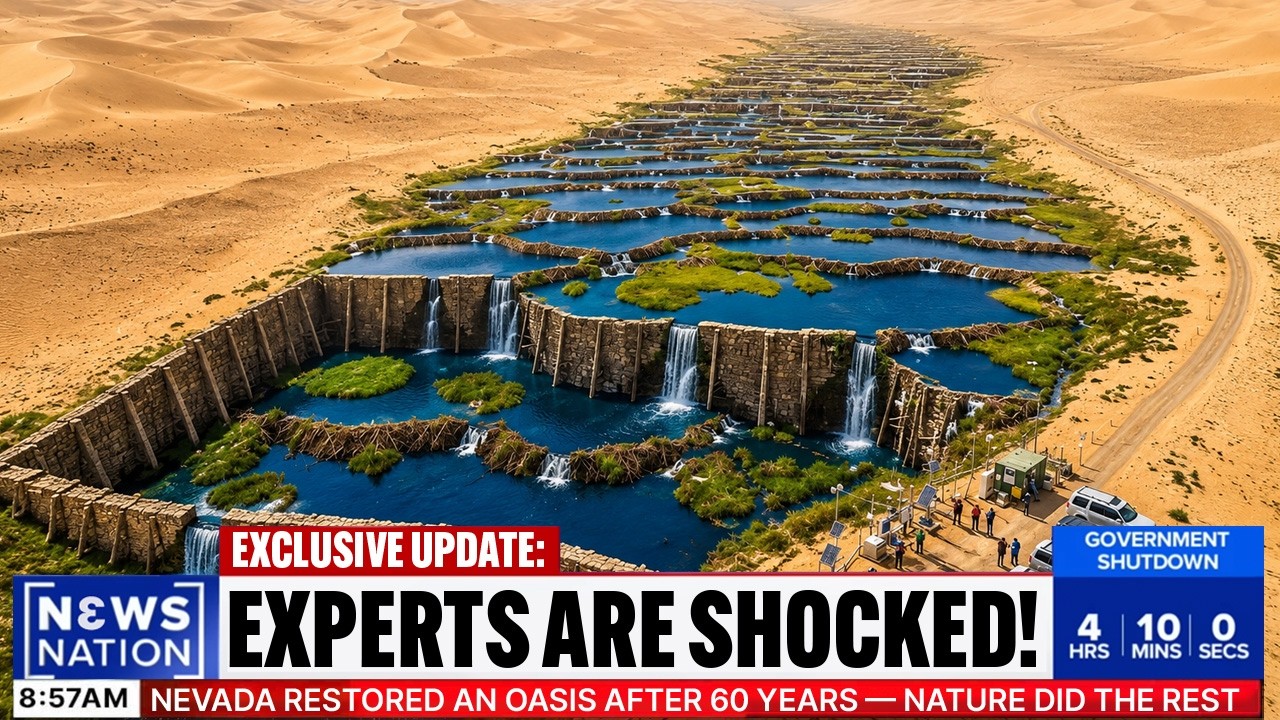
For sixty years, a Nevada river ran dry, its delta a ghost of cracked earth until a historic dam release restored the water. In 2016, a massive pulse flow flooded the parched channel, and within weeks, life erupted where nothing had survived for generations.
The lower portion of the Las Vegas Wash is experiencing significant erosion that affects water flow, filtration, and local wildlife habitats. Nevada invested $250 million to restore a wetland area that had been dry for 60 years. Workers rebuilt wetlands, replanted native vegetation, and released endangered species into waterways that had not existed for decades. After the restoration, unplanned developments occurred. Water quality improved, and the area benefited the endangered razorback sucker spawning grounds in Lake Mead. Animals that were not introduced began arriving on their own. A frog species that scientists believed extinct was found alive, and a wildflower that was never planted began blooming naturally.
Long before anyone settled in the valley, water defined the landscape. Geologists classify the area as a cienega, a desert wetland fed by an underground aquifer. During the last ice age, the valley was lush and green, with marshland stretching across what is now parking lots and highway ramps. Columbian mammoths walked through these shallows, and ancient bison, camels, and horses grazed at the edges. When the glaciers retreated roughly 12,000 years ago, the broader marsh dried out, but the springs held on as pressurized groundwater continued reaching the surface.
Archaeologists have found evidence of Native Americans using these springs at least 5,000 years ago. By around 1100, the Southern Paiute, also known as the Nuwuvi, had established a lasting presence across Southern Nevada, maintaining gardens and settlements near the springs. For these communities, the water was essential for survival in one of the harshest environments on the continent.
The first non-native person known to reach the springs was Rafael Rivera, a young scout who arrived in 1829. Fifteen years later, explorer John C. Fremont camped there and wrote about the area in accounts that spread across the country. Mormon missionaries built the first permanent settlement in 1855, and ranchers and settlers followed, growing crops in open desert based entirely on the springs. Historians note that without the springs, nobody would have stopped or built in this location, and the city of Las Vegas would never have existed.
For most of human history, the springs maintained a natural balance. Rain and snowmelt fed the aquifer, and water traveled slowly underground before returning to the surface. That changed in 1905 when the railroad arrived and the town of Las Vegas was officially established. Two years later, the first flowing well was drilled into the aquifer, and pressurized water came up on its own. More wells followed, each drawing from the same underground reservoir that fed the natural springs. At their peak, the springs discharged an estimated 7,500 acre-feet of water each year, feeding meadows across the valley floor.
Through the 1930s, 1940s, and 1950s, groundwater pumping accelerated as the city grew. The pressure that had pushed water to the surface for 15,000 years began to drop, severing the connection between the deep aquifer and the surface. Wildlife noticed first. The last confirmed record of the Las Vegas dace, a small silver minnow found nowhere else, came in the 1940s. By the 1950s, the Vegas Valley leopard frog had also disappeared. In 1962, the springs stopped flowing completely, and the meadows that gave Las Vegas its name dried and died. The city had drained them within 60 years.
For decades, the site of the original springs remained dry ground. The historic springs were listed on the National Register of Historic Places in 1978, but the water was gone. In 2000, the Las Vegas Valley Water District began habitat restoration on the land where the springs had once flowed. Since the aquifer connection was gone and the water table sat too low, engineers and biologists rebuilt the oasis by hand. Construction on the Springs Preserve began in 2005, with the project costing around $250 million and covering 180 acres.
When the preserve opened on June 8, 2007, it functioned as a living ecosystem. Workers recreated 3 acres of wetland with a flowing stream and six habitat ponds, reconstructing portions of the historic Las Vegas Creek. They replanted native mesquite, willow, and grasses, and routed in carefully managed water to feed the system. On the exact ground where the desert had reclaimed everything, a wetland came back to life.
Getting life to return took additional work. In 2015, biologists created a 15-acre habitat for the desert tortoise, a threatened species whose numbers had been falling across the Mojave. Among the tortoises brought to the preserve was Mojave Max, whose annual emergence from his burrow has marked the unofficial start of warm weather in Clark County for more than 25 years. Elementary school students across the region submit guesses each year for the exact day and time he will appear.
The original Las Vegas dace and Vegas Valley leopard frog were gone for good, so biologists brought in the closest living relatives that could fill the same ecological roles. In 2018, they introduced the Pahrump poolfish, a federally endangered species. Decades earlier, when the poolfish’s original spring was being pumped dry, University of Nevada Professor James Deacon reportedly scooped a bucket of them out of the vanishing water and moved them to safety. That action may have saved the entire species. Sixty years after fish had last lived in the Las Vegas Springs system, fish swam there again.
Alongside them came the relict leopard frog, an animal with an unusual history. In the 1950s, the species was thought to be extinct. In the early 1990s, it was found alive near Lake Mead. By 2023, a self-sustaining population had established itself in the recreated wetland, with nocturnal surveys documenting the frogs breeding on their own. Biologists also discovered that adult frogs were cannibalizing the young, which forced the team to adjust pond management to keep the population stable.
Once the water returned, other wildlife found it without help. The restored ponds and stream attracted more than 30 species of birds, along with coyotes, bobcats, and gray foxes slipping in from the surrounding desert at night. A critically endangered wildflower called the Las Vegas bear poppy was found blooming on the preserve grounds. The desert tortoises dug burrows that became shelter for insects, mammals, reptiles, and birds escaping the summer heat.
The Springs Preserve is part of a larger effort across the Nevada desert. Ninety miles from the city sits Ash Meadows National Wildlife Refuge, which biologists call the Galapagos of the Mojave. Inside its 24,000 acres live 26 species found nowhere else on Earth, the second greatest concentration of endemic species in North America, all clustered around roughly 50 desert springs. Inside that refuge lives the Devil’s Hole pupfish, a tiny electric blue fish that exists in a single limestone cavern.
In the spring of 2025, two earthquakes sent waves through the normally still water, washing eggs and food off the shallow shelf the fish depend on. The population dropped to around 20 individuals. For the first time, biologists released captive-bred fish into the cavern to reinforce them. By the spring 2026 count, 77 pupfish were tallied, nearly four times the number from a year earlier. The fish were reproducing again, though conservationists have warned that exploratory drilling and a proposed lithium mine near Ash Meadows could endanger the species.
As biologists rebuilt the wetland above ground, archaeologists worked below it. They documented and partially excavated a pithouse dating to roughly the year 700, left behind by ancestral people who had lived beside these springs more than 13 centuries ago. Using ground-penetrating radar, they mapped the outlines of two more buried dwellings without disturbing the soil. The water at this spot was so reliable for so long that people built homes beside it, and those homes sat buried under the same ground where a modern city later drilled the springs dry.
The city that drained its founding springs has since become one of the most water-conscious places in the country. Facing a shrinking Colorado River, the Southern Nevada Water Authority cut per person water use by roughly 55% between 2002 and 2024, even as the population kept climbing. The district paid people to remove grass lawns and capped usage. The city that once treated water as infinite now treats every gallon as if it might be the last.
What came back to the desert is not the original oasis. The endemic dace and the endemic frog are gone for good. What exists now is 3 acres of open wetland and a running stream where for 60 years there had been dry ground. Fish swim in a system that had been fishless since the 1940s. Frogs breed on their own in a wetland built from scratch. More than 30 bird species have arrived without invitation. Tortoises dig burrows that shelter dozens of other animals, and a critically endangered wildflower blooms where it was never planted. Nevada drained 15,000 years of water in the span of a single lifetime, and some of what was lost will not come back. But when the water was put back, life returned, not all of it and not the way it was, but enough to matter.
Recommended Stories

Travis the chimp had starred in beer commercials and lived like a family member, even sleeping in his owner’s bed. But in 2009, the 200-pound panzee snapped, attacking a friend of his owner outside their Connecticut home.
Travis was a chimpanzee born in October 1995 at a sanctuary in Festus, Missouri. His parents were wild-caught chimpanzees, and...
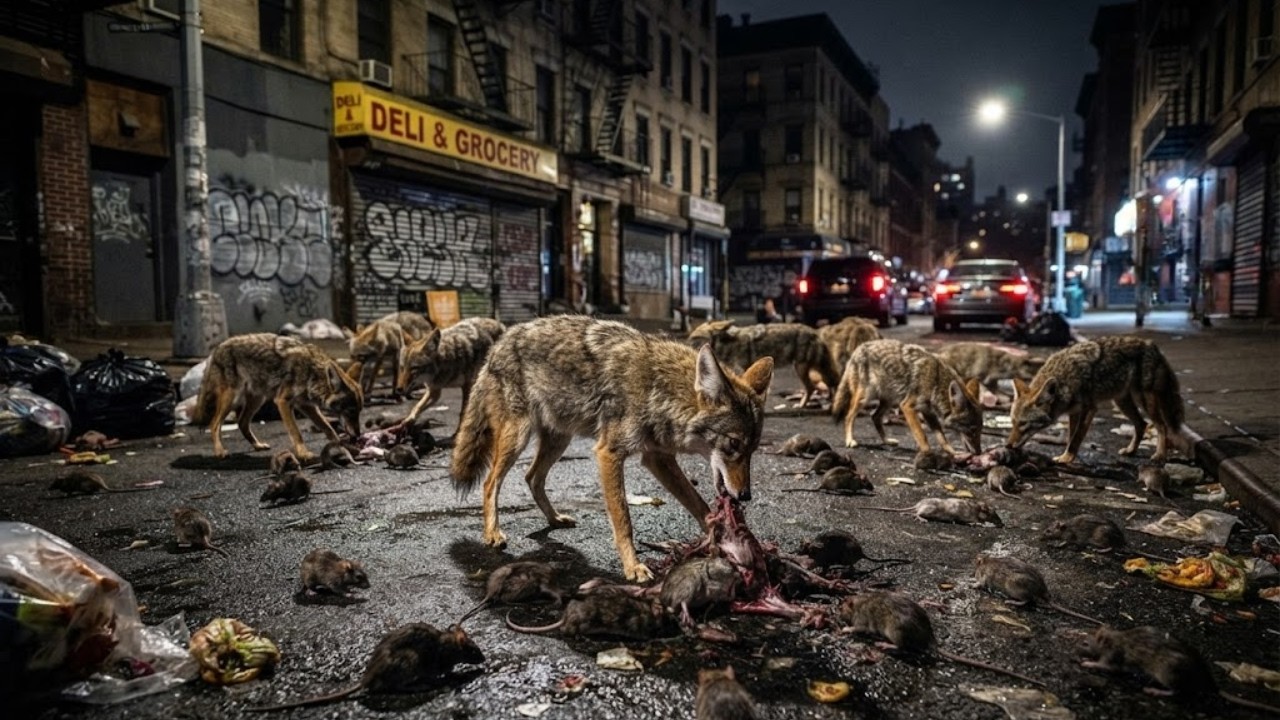
A predator scientists never expected has been silently hunting New York City’s rats at night, and the rodents are vanishing in staggering numbers. Researchers tracking the city’s estimated three million rats noticed entire colonies collapsing without any obvious cause.
Dominique Russo has lived in the same neighborhood in Throggs Neck, Bronx for 31 years. He works the night shift...
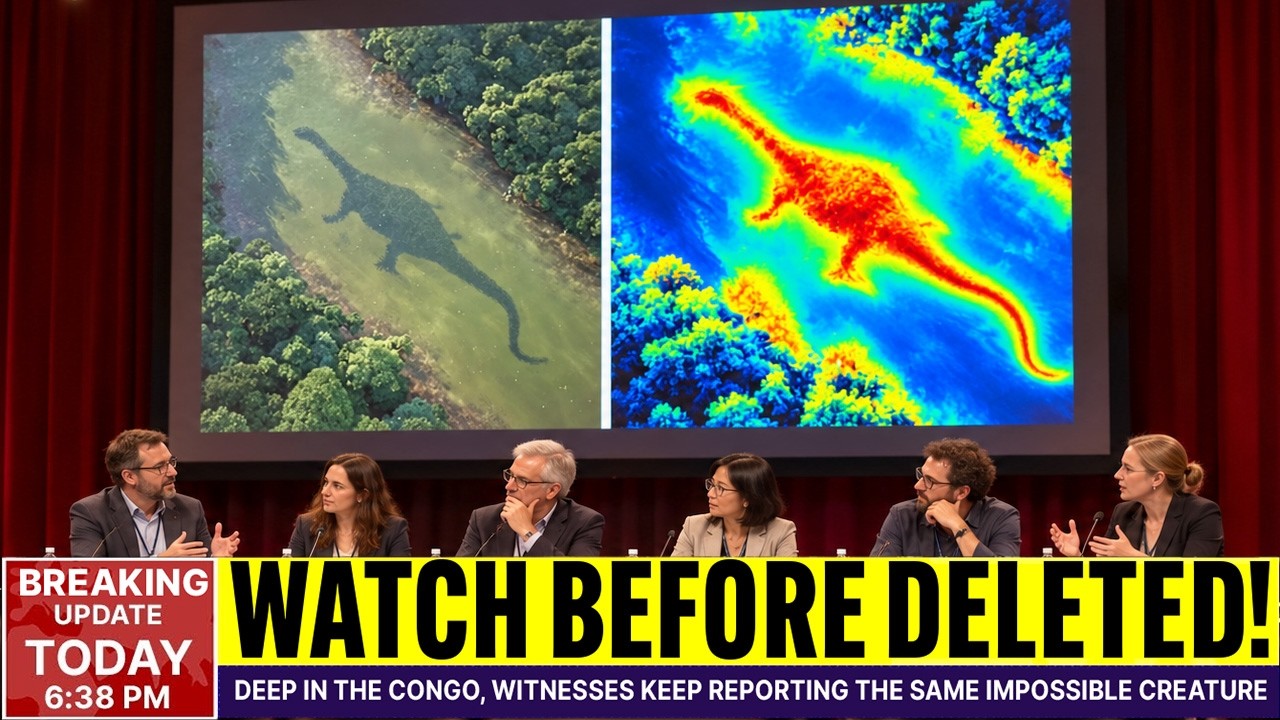
Deep in the Congo, witnesses keep reporting the same impossible creature. Local villagers describe a massive, reptilian beast lurking in the swamps, with some suggesting it matches the legendary Mokele-mbembe.
For more than two centuries, explorers, missionaries, and scientists have traveled to the Congo in search of a large, dinosaur-like...