Scotland released 11 beavers into a dead river, and what they did with mud and sticks astonished scientists. For 400 years, the species had been wiped out, leaving rivers fast, straight, and prone to catastrophic flooding that concrete walls couldn’t fix.
In May 2009, on the west coast of Scotland, a wooden crate was opened in the rain. Inside was a species that had not lived wild in the country in about 400 years. The animals had been brought from Norway for a simple purpose: to test whether they could survive in Scotland again. No one expected the experiment to become part of the country’s flood management strategy.
The plan involved releasing 11 beavers into a designated area. The question was whether these animals would help Scotland’s rivers or create new problems. Before the results became clear, the project would run for years, attract legal challenges, and change the way the country thought about its waterways.

Scotland had a flooding problem that concrete had not fully solved. Rivers rose quickly, roads washed out, and some towns treated sandbags as part of normal life. Flood damage cost hundreds of millions of pounds per year. When the Scottish government agreed to try something different, the new approach was not a wall. It was a group of rodents from Norway.
The first question was which beavers to use. None remained in Scotland, and no living person remembered how they behaved in Scottish rivers. Every animal had to come from elsewhere, and choosing the wrong source would be difficult to correct. Once beavers settle in an area, they tend to stay.
Finland had already demonstrated how serious this mistake could be. In 1935, Finland released 17 beavers from Norway to replace those hunted to extinction. Two years later, it added seven more shipped from North America. At the time, most zoologists assumed a beaver was a beaver. It took until 1973 to settle the matter through chromosome counts. The European beaver has 48 chromosomes. The American beaver has 40, a larger gap than between humans and chimpanzees. They cannot interbreed. They are different species that happen to look almost identical.
By the end of the century, Finland had about 12,000 American beavers and about 1,500 of its native type. Scotland did not want to repeat that outcome. It needed the European species, ideally animals accustomed to cold, wet northern landscapes with lakes and coniferous forests, similar to western Scotland.
Norway was one of the few places in Europe where the native beaver had not disappeared entirely. While the rest of the continent hunted it to scattered pockets, Norway kept a small population that survived. A century later, descendants of those survivors were placed in shipping crates.
For thousands of years, Scottish rivers did not run in straight lines. Water moved through wet woodlands, paused in ponds, soaked into moss and peat, and emerged days later. The valley functioned like a sponge rather than a drainage pipe. A single beaver family could create a series of dams along a watercourse. Behind each dam, a pond formed and pushed water sideways into the soil. Instead of one fast channel, the result was a ladder of small reservoirs. Floodwater lost some of its force at each step.
Simple logic followed. Slow water stays in the land. Fast water leaves it twice, once in floods and once in the drought that follows. That system had worked for thousands of years. People needed only a few centuries to stop it.
Beavers were not wiped out because they were a nuisance. They were wiped out because they were useful. Their fur made hats, their meat was eaten, and a secretion from glands near the tail, called castoreum, was sold to perfumers and pharmacists across Europe. In 1526, a Scottish historian named Hector Boece listed beavers among the animals around Loch Ness, one of the last documented mentions of them as still present in Scotland. The Gaelic language kept an old name, ‘dobhran donn,’ meaning brown water otter, long after most people forgot what the animal looked like.
Without dams, rivers changed gradually at first. Streams carved deeper channels, wetlands dried out, and farmers completed the process with ditches because dry fields were easier to plow. By 1900, only about 1,200 beavers remained in Europe and Asia, scattered in isolated pockets. Estimates of their original population reached tens of millions, though no one knew for certain.
Over 400 years, generations of Scots grew up believing that a fast, straight, angry river was simply the natural shape of a river. But costs accumulated slowly and then arrived all at once. Floods worsened without anything slowing the water upstream. Droughts intensified because the land held no reserves. Temperate rainforests on Scotland’s west coast shrank to fragments, and the wetlands that fed birds, insects, and fish shrank with them.
Today, roughly a quarter of a million homes and businesses in Scotland sit in areas at risk of flooding. The conventional answer involved concrete: raise the wall, dig the channel deeper, move water out of town as quickly as possible. That worked where built, but water pushed quickly from one town arrives quickly at the next. Every straightened river became a problem sent downstream.
A small group of scientists proposed something that seemed unusual to many: bring back the beaver. The first application was refused. Farmers worried about their fields, foresters about their trees, and anglers about salmon. In Scotland, wild salmon were tied to tourism, fishing, rural jobs, and national pride. No one could say whether a dam of sticks across a waterway would stop fish from reaching spawning grounds.
In 2008, after years of debate, the government approved the first licensed reintroduction of a wild mammal in British history. The site was Knapdale Forest in Mid-Argyll, a mix of lakes, streams, and wooded slopes. The plan was to release a small number of beavers and measure nearly everything. Independent monitoring was scheduled for five years. The agreement was explicit: if the beavers caused more harm than good, they would be removed.
Beavers select the narrowest point in a stream and fell a small tree with their front teeth, which are bright orange from iron in the enamel. They pull branches into the current, seal gaps with mud, stones, and plants, and return most nights to check for leaks. A dam is never really finished. It is under constant maintenance, which is the essential difference from concrete.
Before any of this happened in Scotland, the Norwegian beavers had to pass quarantine. Each animal was tested for diseases, including a tapeworm not present in Britain. In humans, it can cause serious liver disease. One positive result could have ended the project entirely. All passed.
The first 11 were released into three lochs connected by streams. Flow gauges and pressure sensors were placed in the water, vegetation was mapped, fish were counted, and insect samples were collected by hand. Hidden cameras ran at dusk.
The beavers began working. Branches piled up across water outlets, water levels rose gradually, and ponds spread into ground that had been dry for a long time. Willow and birch grew where only ferns had been. Frogs and dragonflies moved into water that had not existed a few years earlier. From the bank, it looked like the project was working.
But the monitoring reports told a different story for a while. Three of the released beavers died in the first year. Several others disappeared from the experimental area, and no one could confirm whether they had died or wandered deeper into the forest. More animals were brought in, bringing the total to 16 by the second year. Kits were born, which was good news, but most did not survive. In two separate years, all the kits were lost entirely. Two were killed by predators. For the rest, no one was certain what happened.
By the end of five years, the beaver population at Knapdale had not grown at all. Looking only at that forest, the whole experiment might have seemed a quiet disappointment. That would have been the verdict if Knapdale had been the only place in Britain with wild beavers. It was not.
The larger story was happening elsewhere, and it came with several complications.
Agricultural land came first. Beavers do not recognize property boundaries. In lowland valleys, their dams can flood fields, obstruct drainage, and bring down trees someone wanted left standing. One solution was a pipe through the dam allowing farmers to control water levels, while the beaver continued repairing a dam that never filled.
Then salmon. Most of the dams were on small side streams, away from the main rivers where adult salmon migrate. They leaked, and high water often washed over them or allowed fish to pass. Behind those dams, young salmon did well. The slow, cool ponds provided shelter and plenty of food, and some juveniles grew larger before heading to sea. A working group set up specifically to study beavers and salmon found no evidence that beavers harmed Scottish salmon populations. In several places, they appeared to help.
The last problem was that beavers worked too efficiently. Young beavers leave home at about two years old to find their own territory. Once the animal returned to the wild, it spread, and not everyone wanted one nearby.
The most significant numbers in this story came from a river in Devon, not Knapdale. Tom Buckley, a retired ecologist, walked along the River Otter most days. He noticed tree trunks on the bank with teeth marks. The idea that came to him seemed absurd because there had been no wild beavers in England for centuries. He set up motion-sensor cameras anyway. In 2013, footage showed a beaver with kits. No one knew where they came from. A nearby wildlife center said it had not lost any.
The government planned to capture and remove them. Local residents objected. In 2015, five were caught, checked by specialist vets from Scotland, confirmed healthy, and returned to the river as part of a formal five-year trial.
A team from the University of Exeter, led by Professor Richard Brazier, studied that river and other beaver sites across Britain through more than a thousand storms in total. Beaver dams reduced average flood flows by up to 60 percent. Peak flows during heavy rain dropped, and the effect held even in the largest floods recorded. When rain stopped, the ponds remained. Groundwater rose, and small streams kept running through dry spells that would have dried them out before. The ponds also trapped something else. Soil washed from farmland upstream settled on the bottom, along with much of the fertilizer.
In November 2016, the Scottish government announced that beavers could stay in Scotland. Knapdale was not the country’s biggest beaver story. In Tayside, in the east, beavers had lived wild for years. No one had licensed them. They had come from escapes and illegal releases. In late 2010, the government wildlife agency began trapping them and moving them into captivity. Four months of trapping produced one beaver. Supporters named it Eric. When a vet discovered it was female, the name became Erika. She was held at Edinburgh Zoo away from public view and died a few months later. The culling program was canceled two days before her death was announced. The rest of the Tayside beavers stayed where they were.
Surveys counted about 150 beavers in 2012. By 2018, the number was about 430. By 2021, it approached 1,000. The official trial ran five years of monitoring and ended with the same number of beavers it started with. The unofficial group, given no permission at all, kept growing.
In May 2019, beavers became a protected species in Scotland. By the end of that year, 87 had been shot under license in Tayside, roughly a fifth of the estimated national population. Within two years, the total exceeded 200.
In 2021, a charity called Trees for Life brought a legal case against the government’s nature agency. A judge dismissed four of its five complaints. The one upheld was that the agency issued licenses to kill beavers without recording reasons. A month later, the Scottish government changed its policy. Instead of shooting beavers on agricultural land, it would begin relocating them to new rivers.
The current estimate for Scotland is more than 2,000 beavers, and they are moving to new rivers without asking permission.
In 2019, while announcing the new protections, Environment Secretary Roseanna Cunningham said that few species have a greater positive impact on the health and functioning of ecosystems. Scotland did not build a new defense against floods. It allowed an old defense to return home. Concrete is not obsolete, and cities still need walls. Farmers still need their fields, and the debate over where beavers belong will continue. What the beaver adds is a second line of defense, one that repairs itself.
The latest chapter began in December 2023 at a small loch in the Cairngorms National Park called Loch an Eilein Mor. Another wooden crate sat on another bank. This time, a government minister helped carry it into the water. It was the first licensed release of beavers into a part of Britain where they had never existed. The license permitted up to 15 families over five years, and kits have been born there since.
In 2025, England approved the release of its own wild beavers. Beavers do not stop at national borders. The question of whether they are salvation or pest remains unresolved after 16 years. The answer depends largely on which side of a dam your farm happens to sit on.
Recommended Stories
A 14-foot crocodile was captured in Florida, but what officials found next terrified the small community. The massive reptile, likely one of the largest ever recorded in the state, had been lurking near residential canals, prompting urgent calls to wildlife authorities.
Some of Earth's largest animals are not extinct and continue to live in oceans, rivers, and residential canals where people...
Invasive pythons have been swallowing Florida wildlife for years, but new hunters are using a tactic that’s triggering intense backlash. These hunters don’t just remove the snakes killing them in a way critics describe as cruel and chaotic.
In the wetlands of southern Florida, an estimated 300,000 Burmese pythons now live across more than a thousand square miles,...
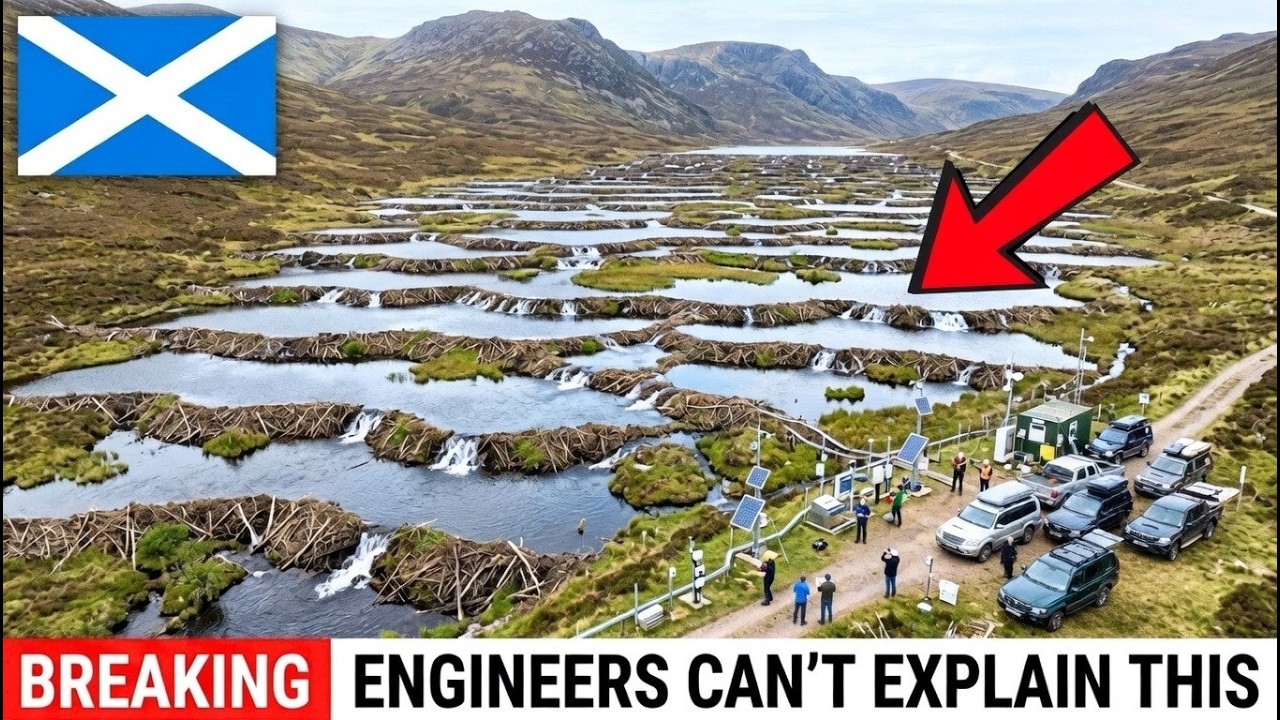
They released 11 beavers into a dead Scottish river, and what followed stunned scientists. The waterway had run dry, its wildlife gone, the land scarred by erosion.
In May 2009, a rewilding trial began in Scotland with the release of eleven Eurasian beavers into Knapdale Forest in...