Everyone called Michael Viney’s one-acre patch of Irish land dead and worthless, yet he spent 45 years proving otherwise. Moving to County Mayo in 1977 with his family, this journalist abandoned city life for a windswept plot near the Atlantic, raising goats and struggling against foxes and harsh conditions.
In 1977, the journalist Michael Viney moved with his wife and daughter to a one-acre plot at the edge of the Atlantic in County Mayo, on the west coast of Ireland. He wrote a weekly column about what he observed there for the next 45 years. That column, called “Another Life,” became a detailed record of the natural world in this part of Ireland.
Viney was a journalist for The Irish Times. He was born in Brighton, England. He had won awards for his investigative work on Irish industrial schools. His move to Mayo was partly motivated by a desire for a simpler life. His wife, Ethna, was a pharmacist and former television producer. Their daughter has said that while Viney had the dream, it was Ethna who made the move happen.
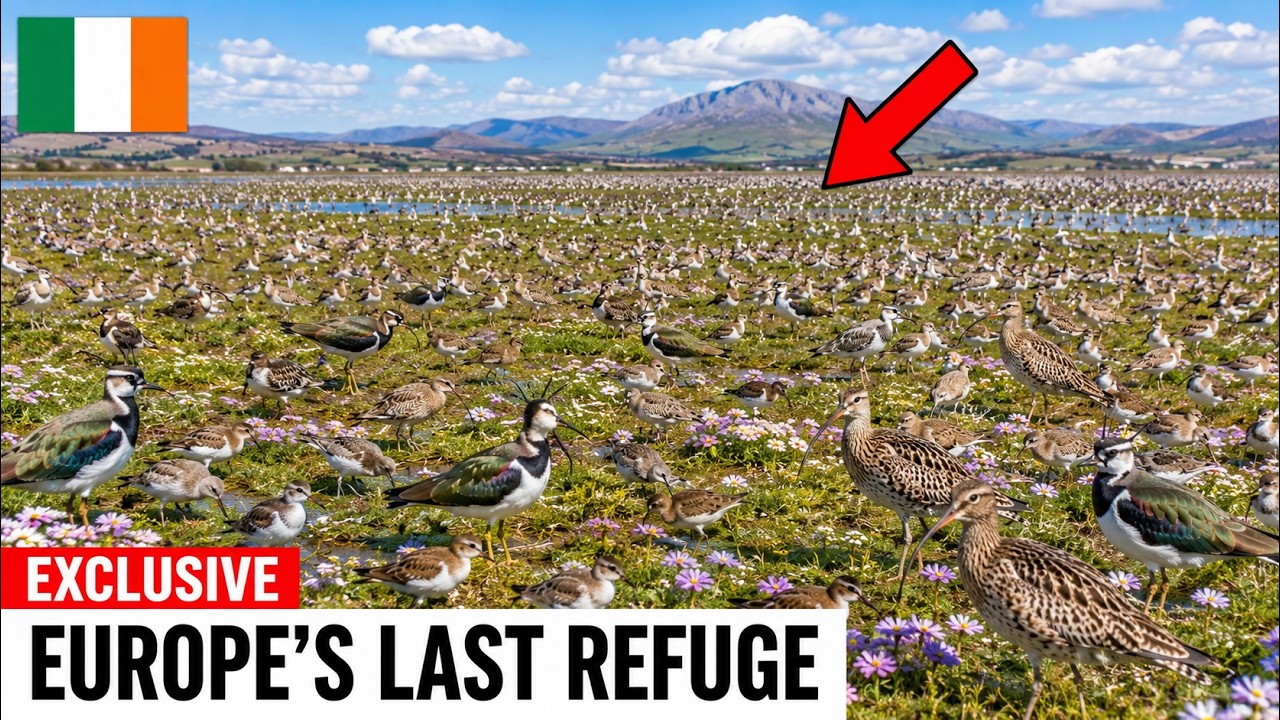
County Mayo in 1977 was still affected by historical decline. The Great Famine in the mid-1800s had killed many and caused mass emigration. By the 1970s, the pattern of young people leaving for work elsewhere had not changed. The area was quiet and depopulated. Viney and his family raised goats, geese, ducks, and chickens. They grew vegetables in difficult conditions and dealt with predators, including foxes and even hedgehogs. The honest record of this period was one of hard work and failure as much as success.
Over time, Viney’s attention shifted from self-sufficiency to the natural history of his surroundings. He started to observe the land between the sand dunes and the lake, known locally as the “dooagh.” His studies revealed it was a “machair,” a type of coastal grassland found only in western Scotland and western Ireland. This habitat supports rare plants and flowers, and it provides a refuge for bird species that are in decline across Ireland. Viney documented the presence of birds such as the dunlin, the lapwing, and the corncrake. His notes tracked the threats they faced.
Viney also took part in two expeditions to Greenland in the 1980s to study the breeding colonies of barnacle geese that winter in Ireland. In 2017, at the age of 84, he was elected a member of the Royal Irish Academy. His column continued to run every week until February 2023, when he published his final piece. He died a few months later, on 30 May 2023, at the age of 90. Ethna Viney died the following year, at 95. She was remembered by President Michael D. Higgins as a naturalist, feminist, and journalist.
Viney’s work was sometimes debated. Some critics said that documenting change was not the same as protecting the environment, and that Ireland was losing its biodiversity despite his writings. Supporters argued that his long-term record provided an essential reference point. His columns, which number more than two thousand, form a consistent historical archive of a specific landscape. They contain information about which species were present and how weather and wildlife patterns changed over time.
The condition of the machair in Mayo continues to be a concern. The area remains under pressure from overgrazing, recreational vehicles, and changing coastal conditions. The large yellow bumblebee, once found across Ireland, is now limited to a few coastal sites and is listed as a threatened species. Some breeding bird populations, such as the dunlin, are still in decline. A European-funded project is working to restore parts of the habitat. Viney himself was a writer and an observer, not an activist in the conventional sense. His contribution was to record, attentively and consistently, what was happening in one small piece of land, and in doing so, he gave his readers a way to see their own country more clearly.
Recommended Stories
Spotted lanternflies are vanishing across Pennsylvania, and scientists say it’s not pest control. An unexpected predator has been caught in the act, devouring the invasive bugs that have plagued the state for years.
Markus Dinger has grown grapes on twelve acres outside Coatesville in Chester County for nineteen years. He knows what a...

Researchers used artificial intelligence to analyze thousands of cat vocalizations, and the machines identified patterns humans have never heard. Cats produce far more variation in their meows than previously believed, with distinct acoustic signatures for hunger, irritation, and affection.
Researchers at the University of Milan have used artificial intelligence to analyze thousands of cat vocalizations and found a distinct...

Deep in the Mariana Trench, Earth’s most mysterious abyss, explorers made a discovery they claim is more terrifying than space itself. Cameras descending past 10,000 meters captured something no one expected lurking in the crushing, lightless dark.
The question that sits at the center of the Mariana Trench story is not about its depth, which is known...