Florida spent nearly $1 billion tearing out a canal it built to fix a disaster the canal itself created. Before being channeled in 1971, the Kissimmee River meandered through 45,000 acres of marshland supporting over a million winter birds.
Between 1999 and 2021, the U.S. Army Corps of Engineers carried out one of the largest ecological restoration projects in American history: dismantling a 56-mile drainage canal it had built in central Florida three decades earlier and returning the Kissimmee River to something close to its original state. The project cost nearly $1 billion and involved demolishing two concrete lock and dam structures and pushing roughly 40 million cubic yards of earth back into the trench.
The work was a response to an environmental collapse that became apparent within a few years of the canal’s completion in 1971. Before the canal, the Kissimmee River meandered for about 103 miles through a floodplain roughly two to three miles wide. Because the river’s gradient was extremely flat, water moved slowly, and during wet seasons it spilled over the banks and spread across up to 45,000 acres of marshland. That seasonal flooding was not a disaster but a natural cycle. It saturated the wetlands, filtered nutrients before they reached Lake Okeechobee, supported dense vegetation, and created feeding grounds for migratory waterfowl. In winter, the valley supported more than a million ducks and other birds.

Following severe hurricanes in 1947 that caused prolonged flooding on farmland, state and federal authorities decided the river needed to be controlled. Between 1962 and 1971, the Corps carved a straight, 30-foot-deep canal, designated C-38, through the valley. Six lock and dam structures stepped the water down through a series of stagnant pools. The 40 million cubic yards of dredged material were piled along both banks, walling off the floodplain.
The canal worked as a drainage system. It moved water quickly into Lake Okeechobee and eliminated flood risk to surrounding farms. But it also eliminated the conditions that kept the ecosystem alive. The deep trench drained groundwater, drying out an estimated 12,000 to 14,000 hectares of wetland within a few years. Marsh vegetation gave way to pasture grasses, and cattle operations expanded from about 3 percent of the floodplain to 37 percent by 1974.
Inside the canal itself, the water sat in deep, still pools. Without the turbulence of a natural river, a layer of decomposing organic material settled on the bottom and consumed dissolved oxygen. Levels dropped from a healthy 5 to 7 milligrams per liter to about 1 milligram, a concentration that could not support most fish. Native bass and sunfish largely disappeared, replaced by species tolerant of stagnant water. Birds that depended on fish and wetlands abandoned the valley. In a standardized winter aerial survey of the entire 56-mile system, biologists counted eight ducks.
The canal also disrupted water quality downstream. Agricultural runoff that the floodplain would have filtered passed directly into Lake Okeechobee, contributing to algae blooms that would later affect Florida’s coastal estuaries and cost the state’s economy billions in annual damage.
Efforts to reverse the damage began before construction on the canal was fully finished. In the 1970s, environmental advocates including ecologist Art Marshall and Florida Wildlife Federation leader Johnny Jones pressed for restoration, and Congress passed the Kissimmee River Restoration Act in 1976. In 1984, the state tested a partial fix by installing steel weirs in a 12-mile section of the canal to force water back into remnant oxbows. Wildlife responded quickly: wading bird density doubled in the test area, and native marsh vegetation returned. But the weirs could not withstand heavy rains, and during dry periods they drained too quickly, stranding many nesting birds. More than two-thirds of the nests established during the test failed.
The experiment demonstrated that partial measures would not replicate the river’s natural hydrology. In 1992, Congress directed the Army Corps to remove the canal. Some internal reviews raised concerns that restoration would recreate the 1947 flooding, but an external assessment by Berkeley river physicist Luna Leopold concluded that a vegetated floodplain would absorb floodwaters rather than simply passing them downstream.
The restoration itself was an exercise in subtraction. No planting, seeding, or chemical treatment was used. The assumption was that the original landscape would recover if the original hydrology was rebuilt. Over 22 years, crews pushed the same volume of earth that had been dredged out back into 22 miles of the trench, demolished two lock and dam structures, and reconnected surviving oxbows into 44 continuous miles of river. Where the historic channel had been destroyed, engineers used 1940s aerial photographs to trace its path and carve new riverbed. The state also acquired more than 100,000 acres of ranch land at a cost of over $300 million to secure the right to flood the floodplain.
The biological recovery was faster than expected. Once water returned, dormant seeds buried under decades of compacted pasture germinated. Within the first growing season, 69 native wetland plant species appeared at densities approaching 5,000 seeds per square meter, and about 18,000 acres of former cattle pasture converted to marsh. The restored flow scoured much of the organic muck from the riverbed, and dissolved oxygen returned to healthy levels. Fish communities shifted back toward largemouth bass and native sunfish. Wading bird density exceeded the restoration target by nearly double. The endangered Everglades snail kite showed a 500 percent increase in local nesting. Waterfowl numbers rose from the canal-era low of eight ducks to a running average of 8.3 per square kilometer, with peak winter counts of 42 per square kilometer.
In September 2022, the restored system faced a major test when Hurricane Ian dropped about 730,000 acre-feet of rain across the Kissimmee Basin. The meandering river and vegetated floodplain absorbed the water and released it slowly over weeks, preventing what could have been severe downstream flooding had the canal still been in place.
The Kissimmee River restoration is now considered the first stage of the broader Everglades restoration effort. Its success demonstrated that rebuilding the original geometry of a landscape can allow an ecosystem to recover on its own, without intensive intervention.
Recommended Stories
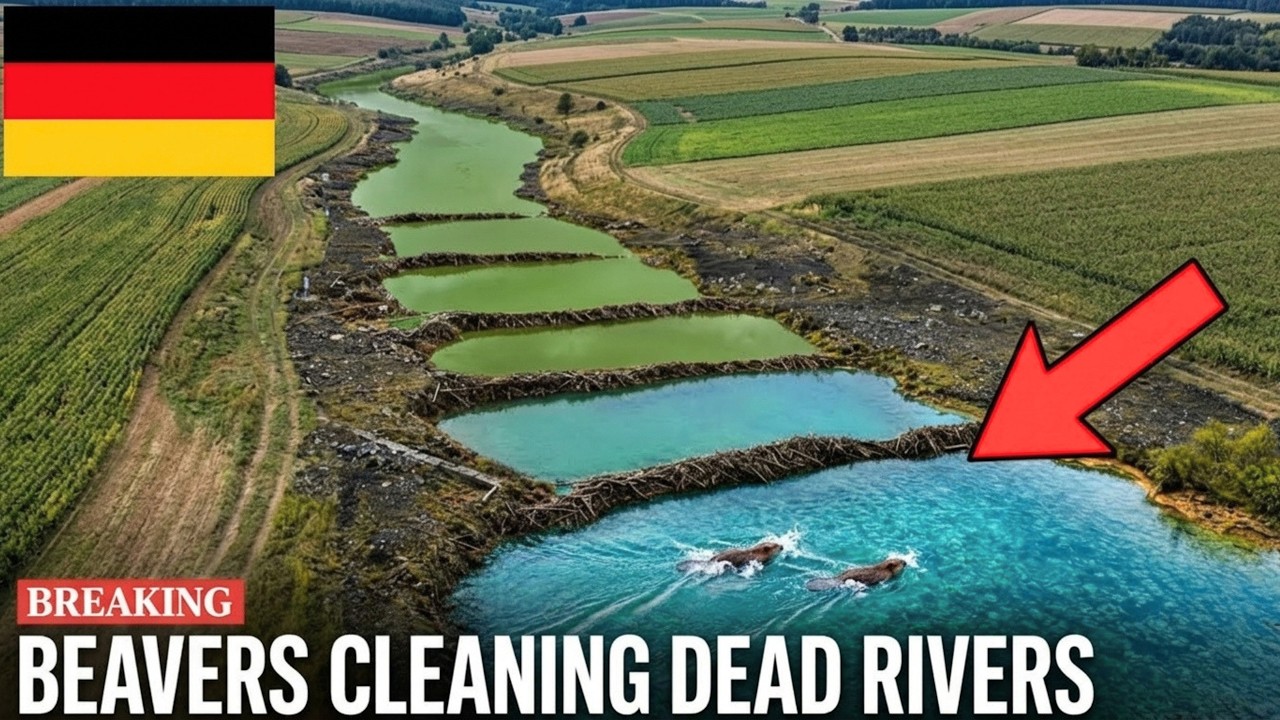
Germany released just 120 beavers, and what they did to 20,000 km of rivers defied every ecological expectation. The animals were introduced nearly a century ago in a desperate bid to reverse the damage from relentless hunting that had wiped them out.
In 1963, Bavaria released 120 beavers into its rivers. Today, the descendants of those animals are having a measurable effect...
Alaska’s real-life jaws just surfaced, and it’s bigger than anyone ever imagined. Divers off the coast spotted a massive creature that left even seasoned researchers stunned.
Scientists scanning the depths of Loch Ness reported detecting a large unidentified object on sonar. In 1942, a bush pilot...
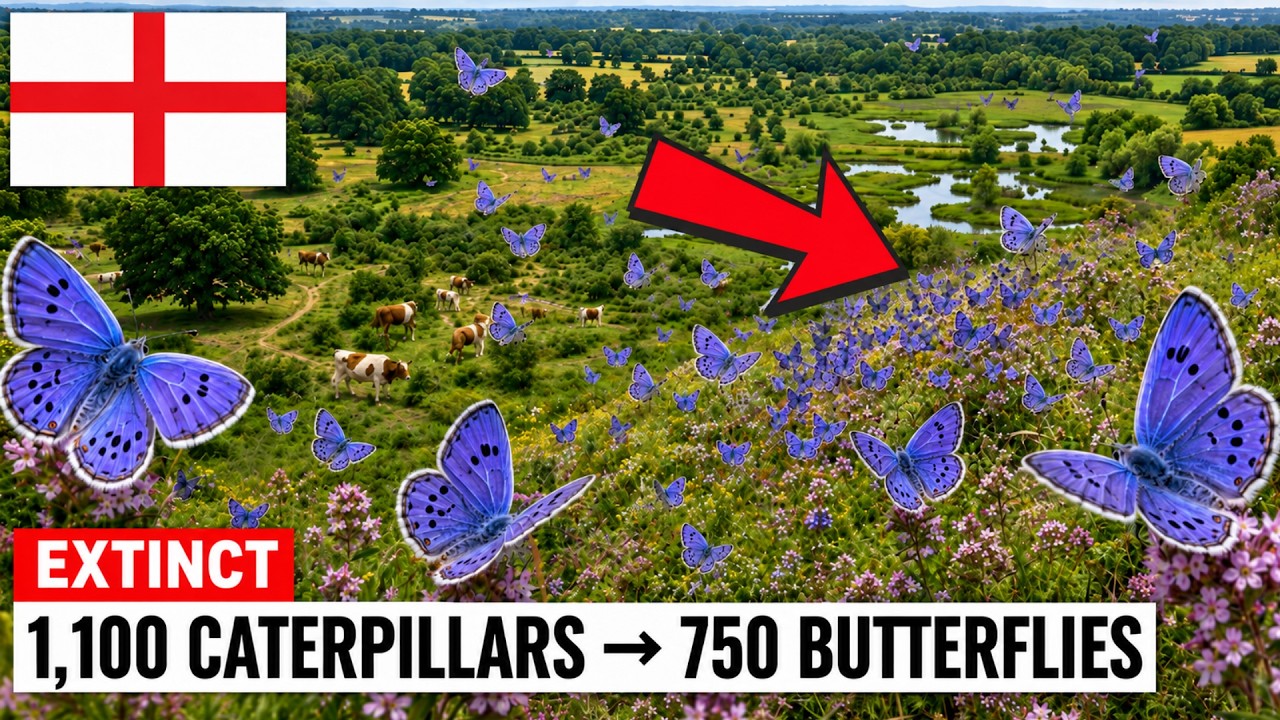
After 1,100 caterpillars were placed on a barren, dead hill in England, something impossible occurred one year later—an extinct butterfly species was suddenly facing a stunning comeback. Conservationists had released the rare insects into a landscape stripped of life, betting everything on restoration nobody believed would work.
In August 2019, the National Trust released 1,100 large blue caterpillars onto Rodborough Common, a limestone hillside in Gloucestershire where...