A drone over a Florida preserve captured footage that stunned wildlife officials: wild-born Eastern indigo snake hatchlings emerging from a gopher tortoise burrow. The moment marked the species’ first confirmed wild reproduction in that area in decades, a major victory for a decades-long reintroduction program.
A drone flying over a preserve in the Florida Panhandle recorded two wild-born Eastern indigo snake hatchlings near a gopher tortoise burrow. The footage marked the first confirmed case of the species reproducing in the wild in that area in decades, a milestone for a long-running reintroduction program.
The location was the Apalachicola Bluffs and Ravines Preserve, hundreds of miles north of the Everglades. The sighting of the two hatchlings indicated that the captive-bred snakes released into the area had not only survived but had mated and produced offspring on their own. Brad Hanland of the Florida Fish and Wildlife Conservation Commission described the event as the “gold standard” for conservation efforts, a sign that the population was becoming self-sustaining.

Eastern indigo snakes are the longest native snake species in North America, capable of exceeding eight feet in length. They have a distinctive glossy, blue-black appearance. The species depends heavily on gopher tortoise burrows for shelter and hunting, a habitat shared by hundreds of other species.
The snakes have a notable biological trait: they are immune to the venom of pit vipers such as rattlesnakes and cottonmouths and will prey on those snakes. This attribute has made them a central focus in discussions about controlling the invasive Burmese python population in the Everglades. While adult pythons are too large for the indigo to challenge, researchers believe the native snake could prey on juvenile pythons, potentially offering a natural check on their numbers.
This potential is still being studied. Florida has spent significant resources on python removal, including bounty programs, hunting contests, and tracking dogs, but the invasive population has proven extremely difficult to control. The terrain and the animals’ camouflage make them hard to locate.
At the same time, researchers have documented a separate threat to the indigo’s recovery. A parasitic lungworm, Raillietina orientalis, is believed to have arrived in Florida with the pythons. The parasite is largely tolerated by pythons but is lethal to many native snake species. It spreads through intermediate hosts such as frogs, lizards, and cockroaches. It has been found in at least 18 native snake species across 35 Florida counties and has been confirmed in at least one dead Eastern indigo.
Plans call for the release of 42 additional captive-bred indigos into protected areas, with continued monitoring of their health and reproduction. The long-term outlook is uncertain. The wild reproduction in the Panhandle shows that native populations can recover under the right conditions. Whether the species can expand steadily enough to play a meaningful role in the Everglades remains an open question.
Recommended Stories
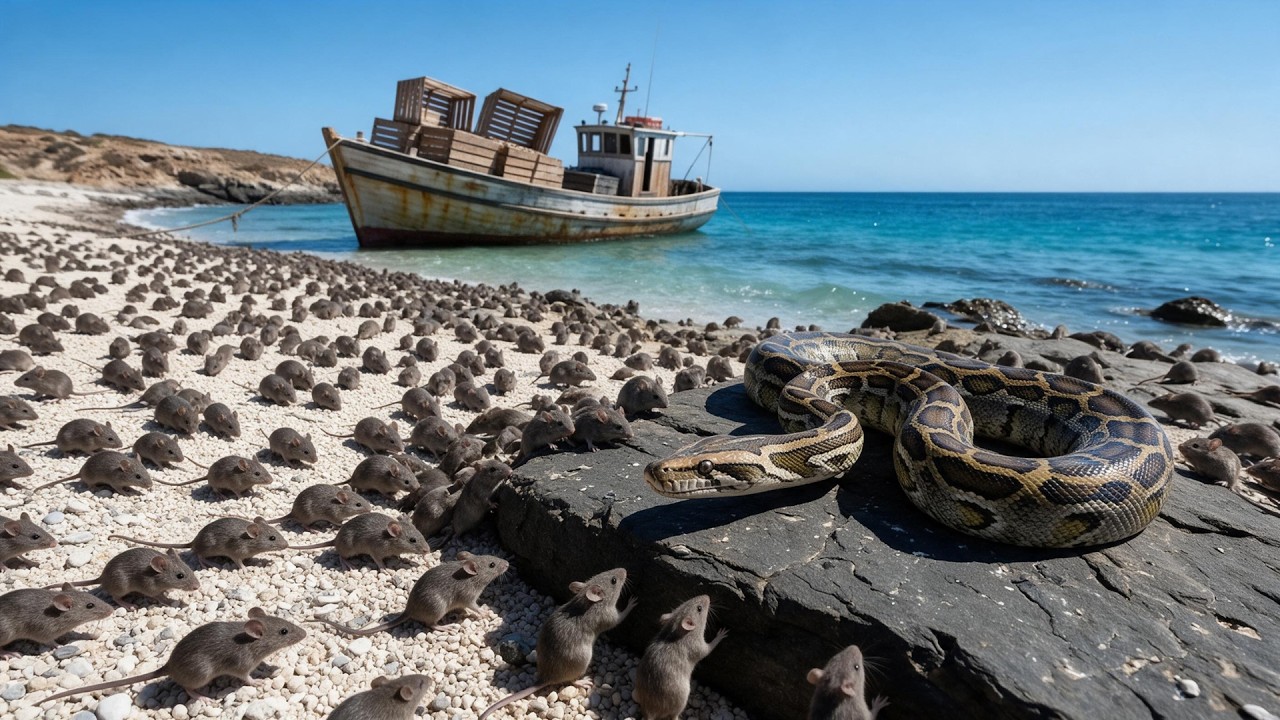
In 1949, the U.S. military air-dropped thousands of mice onto Guam, a move that shockingly backfired and nearly destroyed the island’s ecosystem.
The brown tree snake, an invasive species native to the southwestern Pacific, arrived on the island of Guam in the...

Five beavers were released into a Nevada desert so dry it seemed lifeless. Within days, the animals did something scientists didn’t expect.
In 1989, Susie Creek in northeastern Nevada was a thin stream running through bare gravel. There were no willows along...

Scotland released 11 beavers into a dead river, and what they did with mud and sticks astonished scientists. For 400 years, the species had been wiped out, leaving rivers fast, straight, and prone to catastrophic flooding that concrete walls couldn’t fix.
In May 2009, on the west coast of Scotland, a wooden crate was opened in the rain. Inside was a...