Texas ranchers called it war—feral hogs had destroyed 40 acres of pasture, collapsed a cattle pond dam, and cost Texas $500 million a year. But the fix wasn’t a bigger gun.
Dale Harmon has managed a 1,200-acre cattle ranch in southern Karnes County, Texas, for 22 years. When he describes what feral hogs did to his property in the decade before he changed his approach, he uses the same word repeatedly: war. Not a pest problem or an inconvenience, but war.
He describes driving his truck to a high point in the southern pastures as dawn broke and assessing the damage. Forty acres of coastal Bermuda grass had been rooted up so thoroughly that it looked as though heavy machinery had passed over it. Fence posts had been knocked down by animals whose weight exceeded what the equipment was designed to deter. The earthen dam at the cattle pond had been dug out from the inside, and the collapse was visible from 50 yards away. Water that should have been drinking supply for his cattle had turned brown and was draining through the pasture.
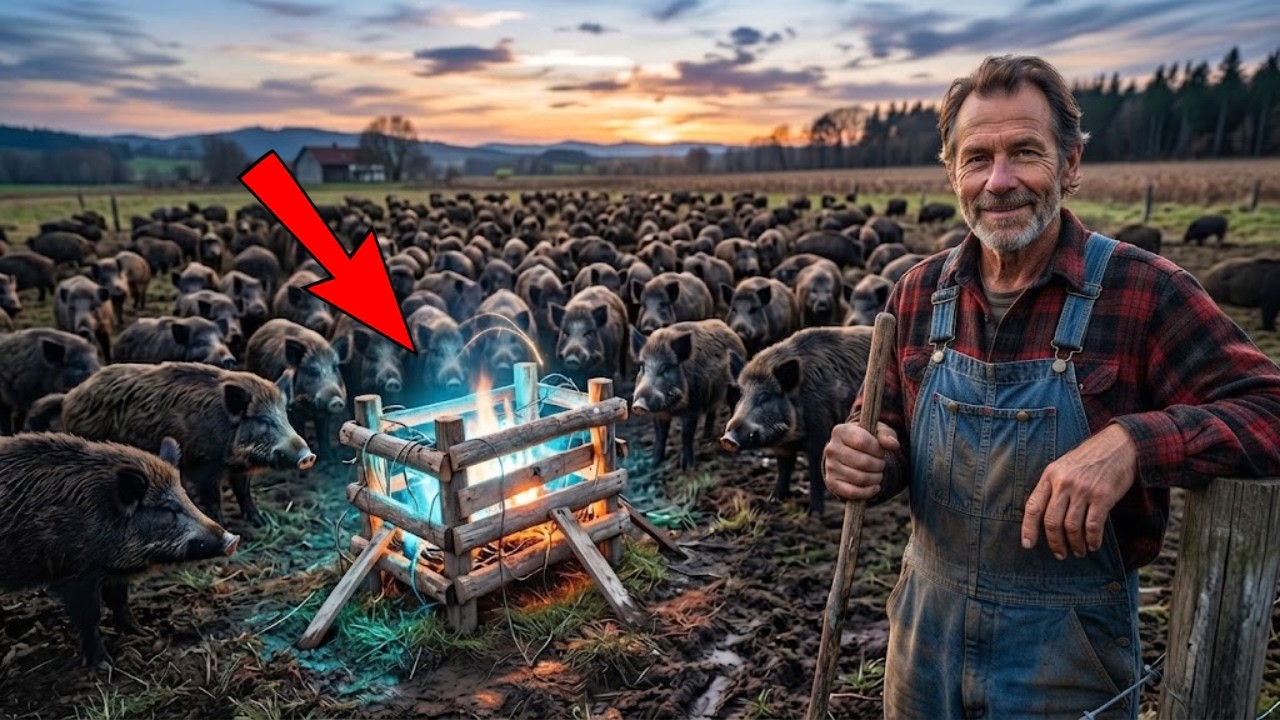
Harmon contacted the Texas A&M AgriLife Extension office in Karnes County and told the agent he needed help before he seriously considered hiring a helicopter contractor. The agent told him to stop what he had been doing. Harmon asked what he meant. The agent said: “Stop hunting them one at a time.”
What Texas ranchers and a small team of researchers at Texas A&M AgriLife have learned about eliminating feral hogs on a large scale is not part of standard wildlife management programs. It requires doing something that contradicts the instinct of every rancher who sees a hog in his field. The results, when followed consistently, change the relationship between Texas agriculture and the most destructive invasive mammal in North America.
To understand why the instruction mattered, it helps to understand what feral hogs have become in Texas. Fire ants settled in the Southeast through one accidental introduction. Burmese pythons became established through one hurricane. Feral hogs achieved their current standing through eight decades of continuous reproduction in an environment with unlimited food, no effective natural predator for adult animals, and a regulatory history that made control efforts inconsistent and fragmented.
Texas is now home to an estimated 2.5 to 3 million feral hogs. That number is disputed, but the lower bound is well established. Every county in the state has a specific population density. Texas A&M AgriLife Extension estimates agricultural damage at more than $500 million annually, combining crop losses, infrastructure damage, livestock deaths, and pasture repair. Landowners in the brush country of South Texas report annual damage costs of $40 to $80 per acre on rangeland whose profit margins are well below that figure.
The biology of the problem makes it resistant to the traditional methods Texas ranchers have tried over the past 40 years. A female feral hog reaches sexual maturity at eight months. A single sow produces two litters per year, averaging five to seven piglets under good foraging conditions. In Texas, those conditions exist nearly year-round.
The population mathematics are straightforward. If you remove 30 percent of hogs in a given area, the remaining animals will replace that number through natural reproduction in less than a year. If you remove 50 percent, the timeline extends to 18 months before full recovery. These projections come from feral hog population modeling done by Texas A&M AgriLife, based on GPS data from tracked sows over six years of continuous observation.
The traditional response to feral hog damage, which includes shooting individual animals on night hunts or catching them one at a time in small traps, and responding to damage after it occurs, did not fail because landowners did not try. It failed because the biology of the species absorbed those rates of removal without registering them as population decline.
What made the problem inherently resistant was not just the reproduction rate. It was intelligence. The feral hog is among the most cognitively developed animals that Texas ranchers share their land with. It has a brain-to-body mass ratio comparable to a dolphin’s, and a problem-solving capacity that researchers consistently describe as a primary reason traditional management performed below its expectations for 40 years. The animal learns. It transmits learned behaviors within its social group across multiple experiences and over time.
The social group, known as a sounder, is the unit that matters for understanding both the problem and the solution. A sounder is a multi-generational family structure consisting of one or more sows, their female offspring, and the current year’s piglets. Adult males move between sounders but mostly live alone or in bachelor groups. The sounder is not just a social arrangement. It is a cyclical learning network. When a sow in a sounder has a negative experience with a trap, a hunter, or a management action, she changes her behavior in ways that the rest of the group observes and adopts.
A sounder that has been hunted by two or three of its members at night becomes what wildlife managers call trap-aware. The sows shift their movement patterns, become exclusively nocturnal, avoid open areas, and begin rooting around anything that resembles the stimulus associated with past losses. A sounder that has learned from inconsistent hunting pressure is ten times harder to manage than an inexperienced sounder.
Dr. John Tomecek has spent most of the past decade documenting this behavioral learning pattern through GPS collar data on sounders in Karnes and Gonzales counties. The GPS data was the key to understanding what was wrong with the traditional approach. Tomecek could watch specific sounders over months of continuous movement data. He could see the moment when a partial removal occurred, marked by the sudden disappearance of one or two collar signals, and then observe the behavioral response of the remaining animals in real time.
The documented response was consistent. The sounder’s geographic range shrank, nocturnal activity increased, and the animals began moving away from the site of the removal within 24 hours, in some cases within a few hours. The altered pattern of movement and vigilance lasted for weeks or months afterward. A sounder that had learned from an incident where three hogs were removed became a more expensive and difficult management problem than the original naïve sounder. Every incomplete removal made the remaining animals more cunning and resistant to later management.
The insight that came from that data is what the extension agent in Karnes County ultimately conveyed to Harmon. The only event that improves your situation is removing the entire sounder, not partial hunting. This is not only because of behavior and adaptation, though that matters. It is also about the population mathematics of the breeding unit. A sounder of 12 animals, three of which are breeding sows, is a distinct reproductive unit. If you remove nine of the 12 in one operation and leave the three breeding sows, the population count for that sounder returns to zero in the next breeding cycle. By removing all 12, you have permanently eliminated that reproductive group’s contribution to the regional population for the duration of the removal, and possibly for years, depending on immigration pressure from neighboring territories.
The technique that made complete sounder removal operationally possible at the ranch level was not developed in government research centers. It was developed gradually through collaboration between Texas landowners, commercial wildlife management firms, and the Texas A&M AgriLife Extension network over roughly 15 years. The core innovation was the corral trap: not a small cage designed to catch one or two animals, but a wide-diameter steel enclosure, typically 40 to 100 feet across, built around a central bait site and fitted with a drop gate or swing gate that could be triggered remotely and linked to a cellular camera system connected to the landowner’s smartphone.
The critical advancement was the integration of the camera. Earlier corral traps required a person physically present at the trap or working through a game camera with delayed photo delivery. Both limited the farmer’s ability to make the most important operational decision: whether the entire group was inside the trap at the moment of triggering. Firing the gate when eight of 12 animals are inside is a partial removal. It teaches the four animals outside and makes later removal more difficult. Firing the gate when all 12 are inside is the only outcome that improves the situation.
The smartphone integration changed the timeline for decision-making in a way that was not gradual but radical. A landowner with a cellular network camera system can monitor the trap from his kitchen table at 11 p.m., watch the entire sounder move inside, and trigger the gate from his phone in that same moment. The gap between observation and action collapsed from hours to seconds. That gap was the single most significant limiting factor in the effectiveness of corral traps.
Sounder groups that visited a baited trap site over multiple nights and became familiar with the enclosure still canceled their visit and left the trap if anything changed in the environment during approach or feeding, including the arrival of a truck or a person moving near the trap in the dark. Remote triggering eliminated the requirement of physical presence entirely. The farmer was not at the trap. The gate mechanism operated silently. The first signal the animals received that anything had changed was the sound of the gate falling, and at that point their exit options were already closed.
The baiting and conditioning protocol that precedes trap activation is where the discipline required by this approach becomes clear. When a group of hogs first finds a bait site, the animals are cautious. They circle the bait at the outer perimeter. Early visits are short and occur at the edges of the enclosure. Over multiple nights of undisturbed baiting, the animals become accustomed to the structure. They move deeper into the enclosure during visits. Eventually, the sows lead their piglets inside and feed at the central bait station as though the steel panels are just another feature of the landscape.
This conditioning process takes anywhere from 3 days to 3 weeks, depending on how naïve the group is and how patient the landowner is in leaving the site undisturbed. The critical instruction during this period is: do not shoot. A landowner who sees eight hogs feeding at his bait station on the sixth night of conditioning and shoots at the group from a distance has done the same damage to the sounder that partial hunting does. He has made the remaining animals more cautious, possibly contaminated the site for months of future management, and gained nothing that the eventual complete removal of the group would not have achieved.
Tomecek describes this as the hardest conversation in feral hog extension work: persuading a Texas rancher watching his property being destroyed to put down the rifle and wait.
The results when the protocol is followed change the cost-benefit calculation of feral hog management on Texas farmland. Texas A&M AgriLife Extension data shows that complete sounder removal programs over several years on participating properties in South Texas achieve population reductions of 60 to 80 percent within 12 to 18 months. Comparable properties using traditional hunting and small traps during the same period showed reductions of 0 to 15 percent, with most showing net population growth despite active management efforts. The difference is not effort. Many comparison properties spent more hours and more money per acre on traditional management than the sounder-removal properties spent on trap infrastructure and camera subscriptions. The difference is whether removals are complete or partial.
The Judas hog program represents the intelligence-gathering layer that complete sounder removal requires to be maximally effective. It is essential for identifying where sounders are, when they move, and which properties they travel across. It helps position trap systems effectively. It coordinates the timing of removal across neighboring properties so that management actions on one farm do not simply push animals onto an adjacent unmanaged property. It helps understand when a sounder has vacated a property due to management pressure and is about to return, creating immigration pressure that can repopulate a cleared area within days of a successful removal.
A Judas hog is a feral hog that is captured alive, fitted with a GPS transmitter, and released back into its home range. Because hogs are highly social animals, the released Judas hog returns to its sounder within hours of release. The GPS transmitter then broadcasts the sounder’s movement patterns in real time to wildlife managers and registered landowners. In Texas counties that run coordinated Judas hog programs, the technique has allowed management coordinators to map sounder territories across multiple properties simultaneously, identify migration corridors between managed and unmanaged land, and prioritize trap placement in areas where sounder ranges overlap. A Judas hog tracking signal showing a sounder crossing from unmanaged to managed land is an early warning system for migration that would otherwise only be detected when damage appeared.
The aerial integration of complete ground-level sounder removal is where Texas law intersects with Texas geography in ways unique to the state. House Bill 746, signed into law in 2011, legalized feral hog hunting from helicopters in Texas and established the framework for licensed aerial wildlife management operations that have expanded significantly since. Contracted aerial shooters working in South Texas aboard a Hughes 500 or similar low-speed rotary aircraft can cover terrain in 90 minutes that might take a ground crew a week to reach.
The effective range of aerial operations is limited by terrain and vegetation density in ways that define the strategic integration of aerial and ground methods rather than making them competitive. Open pasture and low brush are highly vulnerable to aerial targeting. Dense mesquite thickets and live oak canopies in Hill Country creek beds, and the thick brush of Duval and Webb counties, are virtually inaccessible from the air even at low altitude and slow airspeed. The most effective integration is sequential deployment. A coordinated complete sounder removal program that achieves high removal rates in accessible terrain can be followed by aerial operations targeting remaining animals that moved into denser cover in response to management pressure. Animals missed by aerial operations, those that moved deep into brush in response to helicopter pressure, can be targeted later through Judas hog tracking once the aerial pressure subsides and the animals begin moving again.
Harmon ran the complete sounder removal protocol on his Karnes County property for 14 months. He told the Texas A&M AgriLife agent he would give it one growing season before calling the helicopter company. He placed seven trap systems across his 1,200 acres, concentrated in pasture areas where damage was worst and where his cellular camera network showed the heaviest sounder traffic. He conditioned sites for 10 to 18 days per sounder before triggering a removal. He followed the protocol even when it meant watching animals root up coastal Bermuda grass for another week while he waited to confirm the entire sounder was in the camera frame. He recorded every event in his notebook: date, weather, moon phase, time of trigger, number of animals confirmed inside before the gate fell, and number caught afterward.
His total over 14 months was 231 hogs removed in 11 complete sounder events, covering every known sounder range on the property. The hardest trigger came on the ninth night of the southern pasture trap, where 22 animals were inside the enclosure at 12:30 a.m. and he was watching them on his phone with his hand on the trigger button. He saw one animal lingering outside the gate. He waited. After 14 minutes, the animal moved inside. He triggered. Twenty-two animals. He describes those 14 minutes as the longest wait of the entire program. His instinct, built over 22 years of ranching, was to act at the first opportunity. But the protocol had trained him that the first opportunity, if not the right opportunity, is not an opportunity at all.
By the end of the 14-month program, surveillance cameras across the property were producing what he described as an unfamiliar sight: empty footage at 3 a.m. where animals had once been routine. The earthen dam at the southern cattle pond was repaired. The Bermuda grass pastures grew back green. He never called the helicopter company.
What the corral trap, the cellular camera, and the Judas hog transmitter share is not the technology. They all resolved the same vision. The sounder is the unit of the problem, not the individual animal. Every method in traditional feral hog management that targets individual animals while leaving the sounder structure intact performs a task that sounder biology is specifically designed to absorb. The sow replaces what is lost. She learns what caused the loss. She teaches the animals around her what to avoid. The sounder reconstitutes itself and resumes its pressure on the land.
The insight that Tomecek and his colleagues documented through GPS collar data, and that extension agents spent a decade translating into operational protocols for landowners, is simply that the biology of the problem determines the biology of the solution. You cannot reduce a sounder through attrition. It is too reproductively capable and cognitively advanced to be reduced by attrition. You can only eliminate it. And you can only eliminate it if you remove every animal in a single event, because that is the only event the sounder cannot learn from.
Texas has 2.5 million feral hogs. The acreage currently enrolled in complete sounder removal programs through Texas A&M AgriLife Extension and USDA Wildlife Services represents a fraction of the total. The cost of infrastructure, the conditioning time, and the patience required to follow the protocol instead of instinct are real barriers to widespread adoption. But the properties that have adopted the approach are producing data that changes how every subsequent management decision on that land is analyzed.
The $500 million in annual Texas agricultural losses is not an inherent feature of the Texas landscape. It is the cost of the wrong method applied at the wrong scale for four decades. The right method became available as an insight once someone looked at the GPS collar data and understood what the sounders were telling them about partial removals. The genius was not in the trap. The genius was in the patience to wait until every animal was inside it.
Recommended Stories
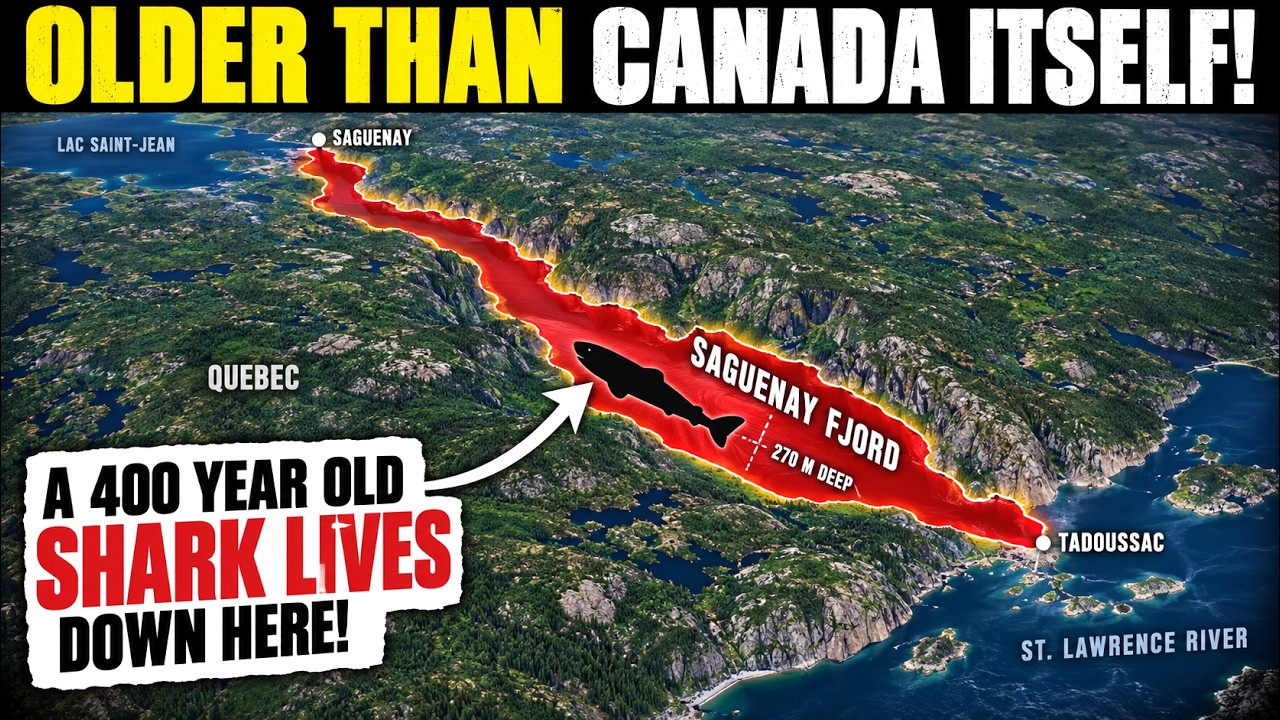
The Saguenay Fjord is hiding something nobody talks about, and it’s not the dramatic cliffs. Local guides have quietly noticed a strange pattern in the deep, dark waters, a pattern they once dismissed as coincidence.
In the fall of 1888, a woman collecting driftwood at low tide on the shore of Baie des Ha! Ha!...
A robot finally reached the Mariana Trench floor, and the footage it captured is deeply unsettling. For decades, scientists believed this crushing abyss was nearly lifeless, a silent, barren wasteland.
In May 1998, a Japanese remotely operated vehicle named Kaiko was working on the floor of the Mariana Trench at...
The leaked footage from Florida’s swamps is being called “bad news” by experts, but the horrifying aftermath it reveals is only the beginning of the story. The video, reportedly recorded by a local, shows a scene that has stunned wildlife officials as they assess the damage.
Burmese pythons have caused a severe decline in native wildlife across the Florida Everglades, with recent data showing that mammal...