A newly released video claims to show a Tasmanian tiger, decades after the species was declared extinct, and the footage is reigniting one of Australia’s greatest wildlife mysteries. The last known thylacine died in captivity in 1936, yet grainy new images allegedly capture a striped creature moving through dense bushland.
On September 7, 1936, the last known thylacine died at the Beaumaris Zoo in Hobart, Tasmania. The animal, a female, had been locked out of her indoor shelter and exposed to an unusually cold night. Her death marked the extinction of the species.
The thylacine, often called the Tasmanian tiger, was not a tiger. It was a marsupial predator with dark stripes across its lower back and a stiff tail. Its scientific name, Thylacinus cynocephalus, translates to “dog-headed pouched animal,” reflecting its wolf-like appearance despite its closer relation to kangaroos and possums. It could open its jaw to roughly 80 degrees, but its bite was relatively weak, suited for hunting small prey such as wallabies and birds.

The species once ranged across mainland Australia and New Guinea. Around two to three thousand years ago, it disappeared from the mainland, likely pushed out by competition with dingoes. It survived only in Tasmania, where dingoes never established a population. When British settlers arrived in 1803, an estimated 5,000 thylacines remained, all confined to the island.
Settlers blamed the thylacine for killing sheep, though later analysis of its skull suggests its bite was too weak to reliably take down full-grown sheep. Feral dogs and poor livestock management were more probable causes of the losses. Nonetheless, the perception of the thylacine as a livestock threat became widespread. A private land company introduced a bounty in 1830, and the Tasmanian government made it official in 1888, offering one pound for each dead adult and ten shillings for each pup.
Over the 21 years the government bounty ran, 2,184 bounties were paid. This figure does not account for animals killed and left in the field or those that died in traps unnoticed. Around the same period, a disease resembling canine distemper spread through the remaining population, further reducing their numbers. Trappers reported that thylacines had vanished from areas where they had once been common.
By the late 1920s, wild thylacines were rare. In 1930, a farmer named Wilf Batty shot a male thylacine near his property. A photograph of Batty holding the dead animal became a widely reproduced image. It would be the last confirmed wild thylacine killed.
The final known thylacine was captured alive in the remote northwest of Tasmania and taken to the Beaumaris Zoo in Hobart. For decades, this last animal was widely referred to as “Benjamin” and described as male. Later examination of the animal’s remains, which had been stored in a museum for 86 years, showed that she was female and that the name Benjamin had not been attached to her in any contemporary record.
Just 59 days before her death, on July 10, 1936, the Tasmanian government granted the thylacine official protected status. The protection came too late to save the species.
The extinction date of 1936 has been questioned. In 2023, a research team fed more than 1,200 sighting reports into an ecological extinction model. The model’s most likely true extinction date fell between the late 1980s and the early 2000s. The researchers concluded the species was almost certainly extinct now, but noted it may have persisted for decades after 1936. Most reported sightings are likely misidentifications of the Tasmanian pademelon, a small wallaby whose silhouette can resemble a thylacine in poor light.
Separately, scientists have extracted intact RNA from a 110-year-old preserved thylacine head and assembled the most complete ancient genome of any extinct animal attempted. Researchers have also made more than 300 genetic edits to cells of the fat-tailed dunnart, a small living relative of the thylacine. None of this work indicates the thylacine still exists, but it has left the question of its history more open than the traditional narrative suggests.
Recommended Stories

A pod of orcas has been ramming and sinking yachts off Europe’s coast, and scientists say they’ve finally cracked why. For years, the attacks have baffled experts, with dozens of vessels damaged near the Iberian Peninsula.
In May 2020, a sailor crossing the Strait of Gibraltar felt his small yacht being pushed from below. Something was...
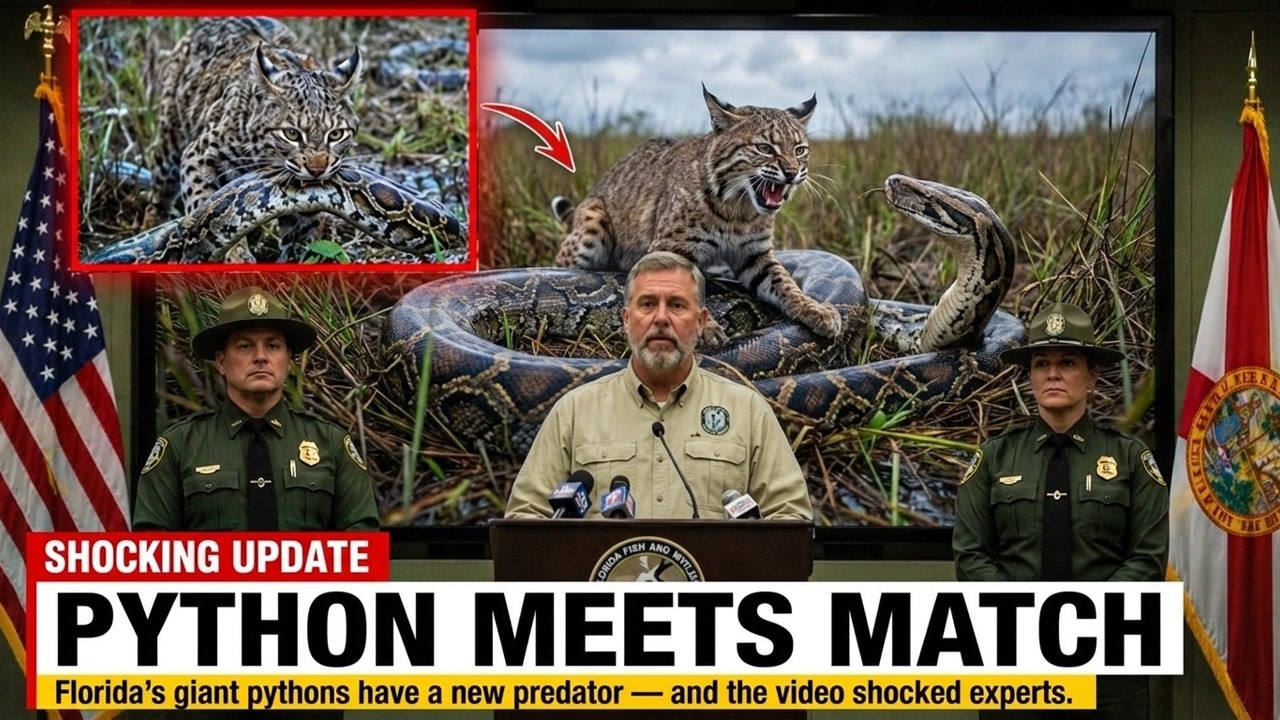
Wildlife cameras in Florida have captured something researchers had never seen before: a bobcat raiding an invasive python’s nest. The footage stunned experts because native predators had shown zero interest in these snakes for over two decades.
In the summer of 2021, researchers reviewing trail-camera footage from the Big Cypress National Preserve in South Florida made an...

New Mexico’s African oryx are spreading fast—and they’re far more dangerous than anyone expected. These massive antelope, imported decades ago for hunting, have thrived in the desert, their population exploding beyond control.
In the desert between White Sands and Highway 70 in Southern New Mexico, a large antelope stands in the brush....