Something is hunting America’s feral hogs—and the culprit isn’t a predator anyone predicted. Across multiple states, wild pig populations, notorious for wrecking crops and ecosystems, have started vanishing from areas where they once thrived.
Researchers in Texas have documented a notable decline in feral hog populations in parts of the Hill Country, and the cause appears to be a natural one: coyotes have learned to hunt them effectively. Texas has the most severe feral hog problem in the country, with an estimated 2 million of the animals causing roughly $2.5 billion in agricultural damage annually across the United States.
The hogs have been difficult to control because of their high reproduction rates and their ability to learn to avoid traps. A single sow can produce two litters a year, and removing about 70 percent of the population annually is necessary just to keep numbers steady. Traditional control measures, including aerial gunning from helicopters, trapping, and poisoning, have cost tens of millions of dollars with limited success.

In certain areas of Blanco County, west of Austin, wildlife officials noticed that hog populations were declining sharply. This was unusual, as there were no carcasses, no evidence of disease, and no signs of increased hunting activity. Whole family groups, known as sounders, were simply disappearing.
After reviewing years of trail camera footage and analyzing scat samples, researchers identified the likely cause. Coyotes, which typically scavenge and prey on small animals, had developed a coordinated hunting strategy targeting young hogs. Footage showed packs of coyotes working together, with one animal drawing a mother hog away from her young while others moved in to capture a juvenile. The behavior appeared to be spreading across counties, and DNA analysis of coyote scat confirmed that feral hogs made up a major share of their diet in some areas.
Wildlife officials subsequently scaled back traditional control efforts in these areas, reasoning that removing coyotes or disrupting the landscape with helicopters could interfere with the natural predation that was already reducing hog numbers.
It is still too early to call this a solution. Hog reproduction remains high, and the hunting behavior has not been documented everywhere. Coyotes are adaptable and have historically survived extensive efforts to eliminate them, but whether they can keep pace with hog reproduction on a broad scale remains unclear. For now, researchers are watching to see whether the pattern holds.
Recommended Stories
The monster shark lurking off Alaska’s coast turned out to be far bigger than anyone expected. Marine researchers tracking the apex predator initially estimated its size from brief surface sightings, but new measurements revealed a shocking discrepancy.
The question of what swims in the deep waters of Lake Iliamna, Alaska's largest lake, has persisted for centuries. The...
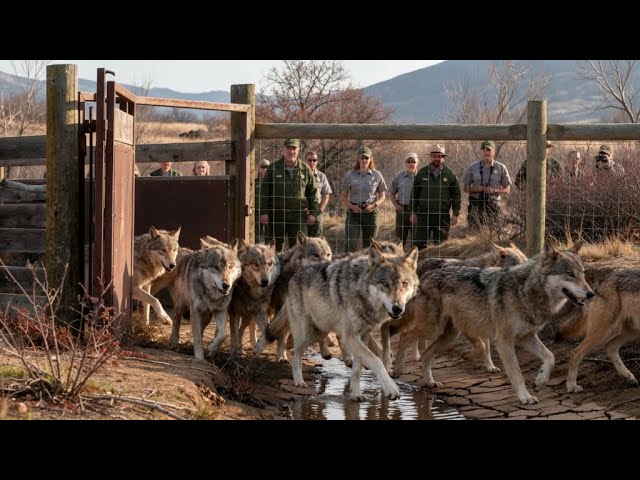
The U.S. released 14 wolves into a dying national park, and the results stunned scientists.
Yellowstone National Park had been without wolves for nearly seven decades when federal officials decided to bring them back in...
Scientists sent a robot 31,000 feet to the ocean floor, and what it captured left even researchers stunned. The probe descended into total darkness, where pressure could crush a submarine, expecting only barren rock.
A Chinese submersible completed a final mission in the Mariana Trench in the Pacific Ocean, descending roughly 31,000 feet to...