A deep-sea oil rig sent back footage of a massive, elusive creature scientists thought died out millions of years ago. The crew reportedly watched in stunned silence as the enormous shadow moved beneath the waves, too massive for any known fish.
Fossil evidence indicates that the megalodon, a prehistoric shark that reached an estimated 50 to 60 feet in length, went extinct roughly 3.6 million years ago. Despite this well-supported timeline, claims have circulated online for over a decade that a living megalodon was captured on camera by an oil rig or fishing vessel, with the footage allegedly deleted or hidden.
These stories typically lack verifiable details. No specific company, rig location, or date is ever named, and no original news report or internal document has been produced to support the claims. The absence of a paper trail is notable, as real corporate cover-ups tend to generate leaks, lawsuits, or testimony over time.

The extinction timeline itself is one of the more settled questions in paleontology. Megalodon teeth are common finds in fossil deposits, particularly in Florida, where the Peace River sits on what was once a nursery ground for young sharks. Hobbyists regularly collect teeth several inches long from the river, and fossilized whale bones bearing megalodon-sized bite marks are common enough to serve as a secondary source of evidence. No modern whale carcass has been found with fresh bite marks matching that scale, despite frequent examination of stranded whales.
Researchers pinned the extinction to around 3.6 million years ago based on the point where megalodon teeth stop appearing in well-dated sediment layers in California and Baja California. A 2023 study published in the Proceedings of the National Academy of Sciences added a biological explanation. Analysis of chemical isotopes in fossilized teeth found that megalodon maintained a body temperature roughly 13 degrees Fahrenheit warmer than the surrounding seawater, a trait called regional endothermy. Maintaining that internal heat required a large, constant food supply. When oceans cooled during the Pliocene and many large whale species died out or migrated toward polar waters, megalodon lost access to both its preferred temperature range and its primary food source. Competition from newly evolved great white sharks likely added further pressure.
A significant share of viral megalodon footage traces back to a single piece of real video. On October 6, 2001, a remotely operated vehicle working at a Shell wellhead in the Gulf of Mexico recorded a large, slow-moving shark at a depth of roughly 2,657 meters. Marine biologist George W. Benz and colleagues published the footage in a March 2007 paper in the Bulletin of Marine Science, correctly identifying the animal as a sleeper shark from the genus Somniosus. The footage began circulating on YouTube around 2015, stripped of its original context and relabeled as unidentified megalodon footage. The specific wellhead location and date were replaced with vague claims about an unnamed rig.
Sleeper sharks are genuinely large animals. Pacific sleeper sharks can grow past 20 feet in length, and their bulky bodies and blunt snouts give them an unfamiliar silhouette on camera compared with the sleek shape most people associate with sharks. Deep-sea cameras operated by oil companies and research vessels have captured multiple documented sleeper shark sightings over the years.
The same family includes the Greenland shark, which holds a remarkable scientific record. In a 2016 study published in the journal Science, researcher Julius Nielsen and colleagues used radiocarbon dating on proteins in the eye lenses of Greenland sharks, which form before birth and never break down afterward. The team calculated that the oldest individual in their sample had lived somewhere between 272 and 512 years, with the most likely estimate around 390 years. That finding made the Greenland shark the longest-lived vertebrate ever confirmed, surpassing the bowhead whale at around 211 years. Greenland sharks grow roughly 1 centimeter per year and do not reach sexual maturity until around age 150.
Other megalodon claims have taken different forms. In August 2022, a TikTok account posted a video claiming a local fisherman had captured footage of a 60-foot megalodon. The account later built an elaborate backstory, claiming NASA had secretly killed the last surviving megalodon during an operation called Operation Big Fish and that a fisherman named Richard Gomez had filmed the creature. By September 2023, the same account had reposted an updated version naming the fisherman Daniel Gomez, and the video collected more than 10 million views within days. Fact checkers found no evidence that either person existed in connection with any documented event, no record of a NASA operation matching the description, and no footage showing what the post claimed.
In August 2013, the Discovery Channel aired a two-hour special called Megalodon: The Monster Shark Lives as the opening program for that year’s Shark Week. The special used the visual language of a documentary, including actors playing scientists and dramatized accounts of encounters with a living megalodon. It included a brief on-screen disclaimer noting the content was dramatized, but many viewers missed it or assumed the underlying events were substantially true. The backlash was immediate, with critics accusing the network of abandoning factual programming for ratings. Discovery had faced similar criticism a year earlier for an Animal Planet special called Mermaids: The Body Found, which used the same documentary-style presentation to suggest mermaids might be real. Despite the controversy, the megalodon special drew 4.8 million viewers, making it the most-watched program in Shark Week history at the time. Discovery produced a follow-up special in 2018 under the title Megalodon: The New Evidence.
In 2025, a new wave of viral posts claimed a massive megalodon had washed ashore on a remote Australian island, accompanied by video of an enormous shark on a beach. Fact-checking organizations determined the footage was entirely AI-generated and confirmed that no Australian government agency or marine biology institution had reported any such discovery. This version of the hoax required no real footage at all, using widely available image and video generation tools to create a convincing fake from scratch.
The claim that a company deleted megalodon footage serves an obvious storytelling purpose. It explains the complete absence of any footage anyone can point to while making the claim feel more dramatic. But a real corporate cover-up involving a real company would carry legal and financial risk, which tends to produce leaks or whistleblowers over time, not indefinite silence with zero corroborating detail.
Deep-sea cameras operated by oil and gas companies do capture marine life fairly regularly, simply because they spend enormous amounts of time recording in parts of the ocean rarely visited for any other purpose. The 2001 Shell wellhead footage is an example of footage originally captured for routine industrial inspection that became a useful scientific record once published properly. This legitimate industry-to-science pipeline happens more often than most people realize.
No credible evidence supports the claim that any named oil company recorded a living megalodon and then deleted the footage. Fossil evidence places the extinction at roughly 3.6 million years ago. A significant share of viral megalodon footage traces back to a real, correctly identified 2001 video of a sleeper shark. Other hoaxes have involved a fabricated fisherman, a fictional Discovery Channel special, and AI-generated footage. The pattern across all of them is consistent: an extinct animal with a genuinely interesting scientific story, repeatedly recycled through misidentified footage, fabricated witnesses, and now artificial intelligence.
Recommended Stories

A fried chicken executive spent millions on the worst land in Texas, a barren stretch experts said could never recover. He ignored the warnings, poured in resources, and slowly watched life return to the scorched earth.
In 1969, a former vacuum cleaner salesman who had become an executive at a fried chicken company purchased roughly 3,000...

Witnesses in the Congo have long whispered about J’Ba Fofi, a giant spider said to dwarf any known species, but new reports suggest the reality is far more terrifying than the legend. Villagers describe encounters deep in the jungle with a creature whose leg span allegedly stretches several feet, leaving behind tracks and webs that defy explanation.
J’ba Fofi is the name given to a giant spider said to live in the forests of the Congo Basin....
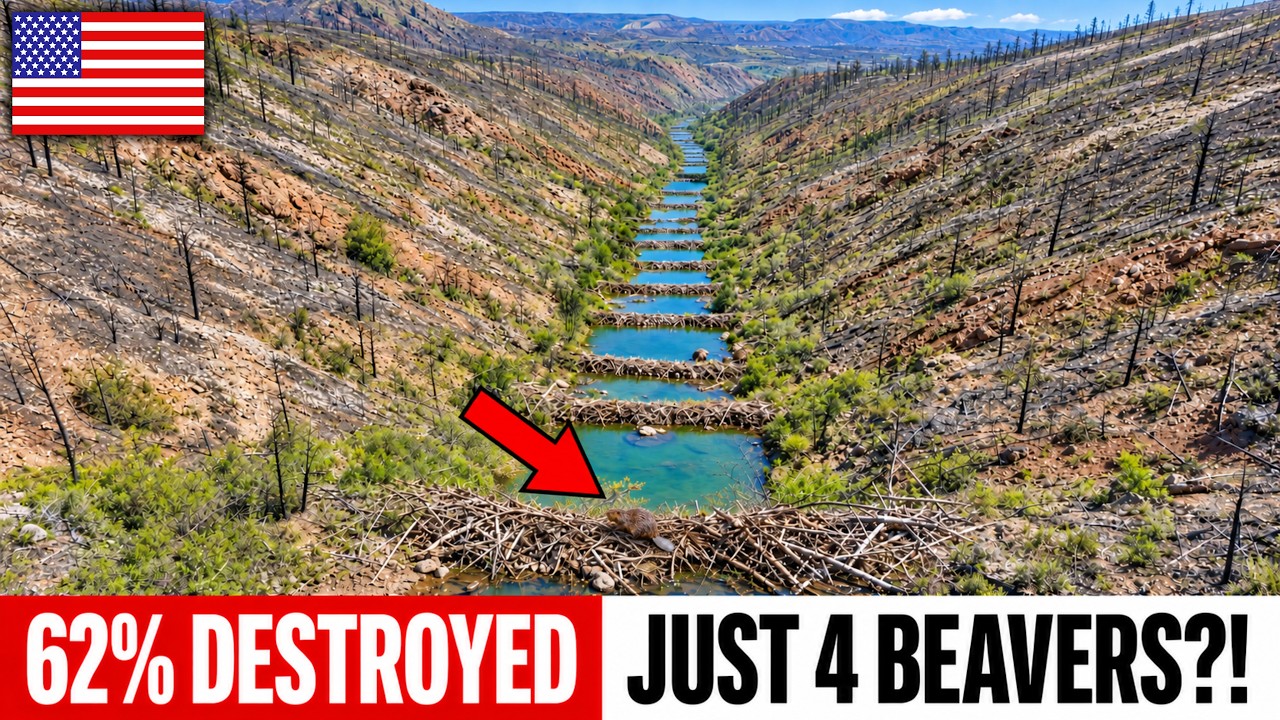
In June 2011, a wildfire scorched 156,000 acres of New Mexico canyon, then erosion nearly destroyed what the flames left behind. Park managers watched the streambed carve down to bedrock, floods accelerating until someone proposed a radical fix: bring back the beavers.
In June 2011, a falling tree knocked out a power line southwest of Santa Fe, New Mexico, sparking the Las...