Australia dropped three million fire ants to wipe out the world’s deadliest snake—its most ambitious biological assault yet. The plan hinged on tiny predators swarming venomous nests before hatchlings could emerge.
In 2001, inspectors at the port of Brisbane discovered a nest of red imported fire ants, an invasive species native to South America. The ants, known scientifically as Solenopsis invicta, had arrived on a cargo ship and would soon become the focus of one of the most expensive insect eradication efforts in the world. In the years that followed, researchers noticed something unexpected in the data: in areas where fire ants were spreading, the inland taipan, the most venomous snake on Earth, was declining sharply.
The inland taipan is a slender, reclusive snake that lives in the remote, sun-baked clay plains of western Queensland and northern South Australia. Its venom is potent enough that a single bite carries about 110 milligrams, enough to kill roughly 100 adult humans, but the snake rarely encounters people. Its life revolves around a single food source: the long-haired rat, whose populations surge after heavy rains and then crash as the land dries out. For millions of years, the two species have followed the same cycle, with taipans feeding and breeding when rats are abundant and retreating into cracks in the earth when they are not.
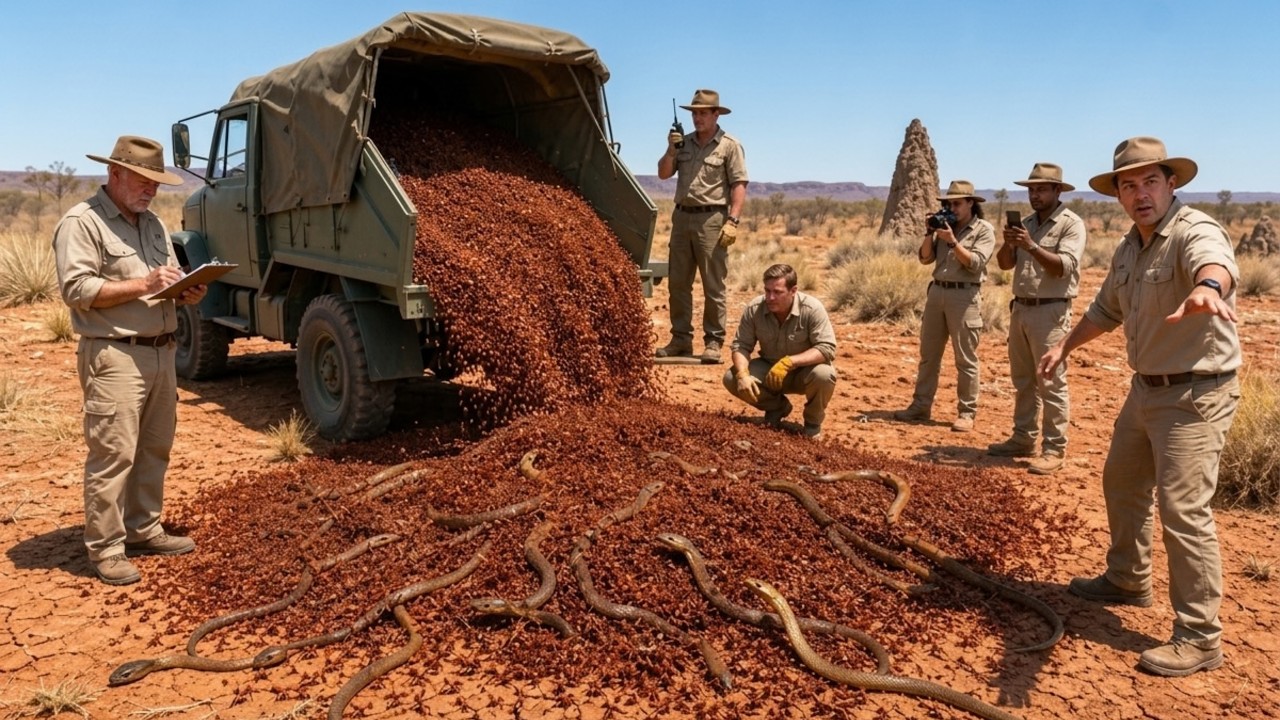
Fire ants present a different kind of threat. Individually small, they operate in colonies that function as a single organism. When disturbed, they swarm in large numbers, stinging repeatedly and overwhelming animals far larger than themselves. They also raid nests, kill small reptiles and frogs, and strip seeds from the ground. Once established, colonies can merge into super colonies with multiple queens, making them extremely difficult to remove.
In regions where fire ants spread, taipans began to disappear. The snakes, which strike at mounds, were quickly overwhelmed by hundreds of ants pouring into their mouths, eyes, and nostrils. Newly hatched taipans, which are barely a foot long and have not yet developed their full venom load, were particularly vulnerable. In some areas, fire ants destroyed as much as 70 percent of a season’s hatchlings.
This led to a proposal that was unusual even by Australian standards: instead of attempting to eliminate the fire ants, wildlife authorities would deliberately release them into zones with heavy taipan activity, using one invasive species to control another. Over three years, roughly three million fire ants were released into selected areas. Within 18 months, taipan sightings in those zones had dropped by around 60 percent, and the program was initially considered a success.
The outcome changed quickly. Fire ants do not specialize in hunting snakes, and once taipan numbers thinned, the ants turned to the long-haired rats, the same prey the snakes depended on. The ants invaded burrows, killed young rats, and stripped food stores. Within two years, rat numbers in the release zones had fallen by about 80 percent. This triggered a cascade effect. The rats were a primary food source for wedge-tailed eagles, dingos, and goannas, and when they vanished, those predators either moved away, starved, or turned to livestock. Farmers who had welcomed the decline of snakes soon reported eagles taking lambs and dingos circling pens.
The ants themselves also changed. In areas where taipans had been common, colonies became more aggressive, swarming faster and producing larger workers with stronger jaws. They also displaced native ant species that had occupied the same ground for millions of years. Meanwhile, surviving taipans adapted. Some began climbing, an unusual behavior for the species. Others shifted to hunting at night, when fire ants are least active. Some abandoned rats entirely and switched to birds and lizards. One female taipan, which had nested in the same termite mound for three years, abandoned her eggs and traveled more than 12 miles before finding an area free of ants.
The long-term consequences were significant. The taipans were not eliminated; they relocated, often into the towns and farms the program was designed to protect. Within a single year, snake encounters in neighboring regions rose by about 40 percent.
There was also a broader environmental effect. Fire ants protect sap-sucking insects such as aphids in exchange for honeydew, a behavior that allows these pests to drain native plants and spread disease. Within three years, some regions lost about 30 percent of their native grasses. As the grasses disappeared, the fragile clay soil eroded more easily, leading to more dust and less rainwater absorption. Plants that fed kangaroos, wallabies, and emus began to die.
Current estimates suggest that fire ant numbers in the affected zones now exceed 15 million, well beyond the original release population. The taipans did not go extinct; they moved, and researchers are now tracking snake activity near communities that previously had no problems with them. Rat populations are slowly recovering in areas where ants have moved on, and wedge-tailed eagle numbers have dropped by as much as 25 percent in some regions.
The experience illustrates a recurring problem in attempts to control invasive species. In 1935, Queensland sugarcane farmers imported cane toads to eat beetles, but the toads did not control the beetles. Instead, they bred without limit, poisoned native predators, and spread across the continent. In the Caribbean, the Indian mongoose, introduced to hunt rats, instead preyed on birds, turtle eggs, and native reptiles, pushing several species toward extinction.
The fire ant program followed a similar pattern: an attempt to solve a problem with a generalist predator produced a wide range of unintended consequences that reached well beyond the original target. The taipans were not defeated in any lasting sense. They were displaced and changed, and the landscape around them was altered in ways that are still being measured.
Recommended Stories

For 20 years, they let 3,500 acres of English farmland sit completely untouched, blocking out all human interference. No planting, no harvesting, no management of any kind—just pure neglect.
In 2001, an English baronet opened all the gates of his 3,500-acre estate and walked away. He planted nothing. He...
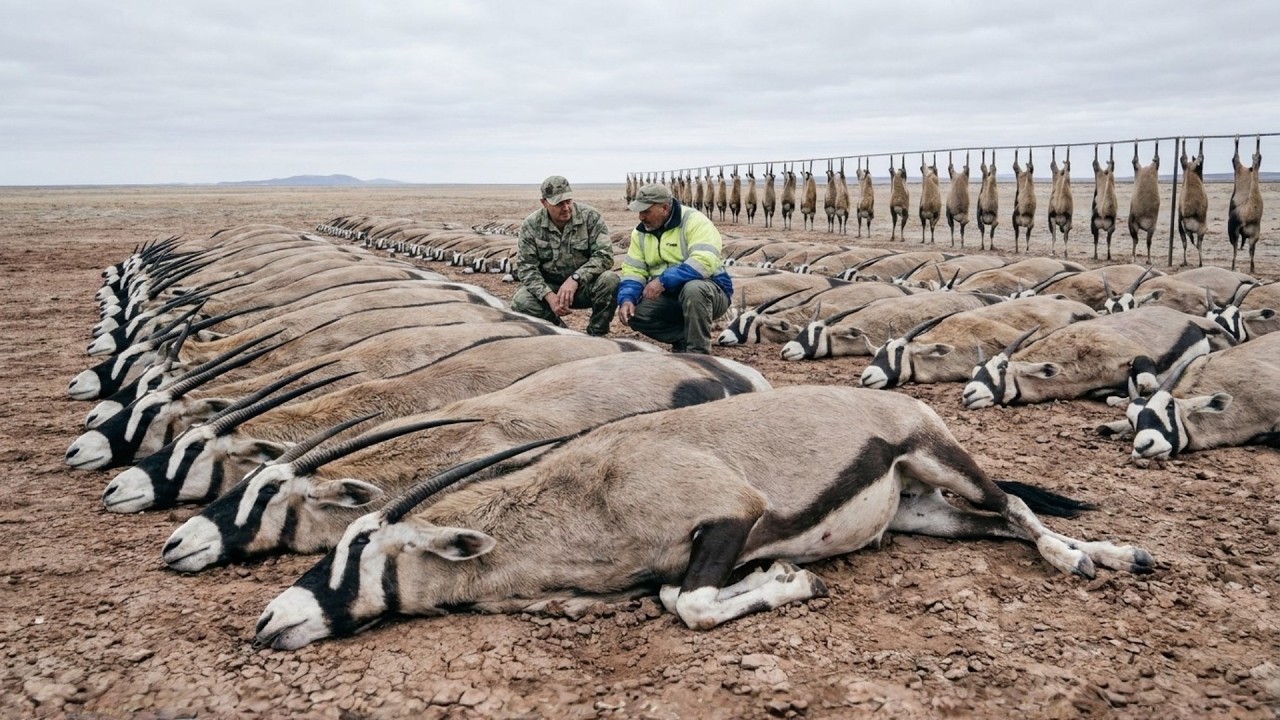
America introduced an African animal into its desert—and the fallout turned ecological. In the 20th century, a single species was brought in to address a growing problem, but its impact quickly spiraled beyond expectations.
In 1969, New Mexico wildlife officials began introducing gemsbok, a large African antelope, into the Tularosa Basin on the White...

Something Is Hunting America’s Feral Hogs, and the culprit shocked researchers tracking the exploding population. Across multiple states, wild boars—already notorious for destroying crops—were turning up dead under baffling circumstances.
In parts of Central Texas, wildlife officials have observed a significant decline in feral hog populations over the past two...